Boca Raton, Florida, US|CRM & Marketing Technology
2025
Streamlining Operations with ERPNext for a Kitchen Remodeling Brand
A kitchen remodeling business in the U.S. had all the right tools on paper: Salesforce for managing leads QuickBooks for accounting and finances SOS Inventory for stock management But together? The systems didn’t work in sync, leading to fragmented operations. Each platform functioned well independently, yet none of them were properly integrated with the others. This created data gaps, where small errors gradually compounded over time, and teams ended up spending more effort fixing issues than focusing on day-to-day operations. By the time the team reached out to Solvios Technology, they had clearly defined goals: Consolidate everything into a single system Build something unified, reliable, and flexible enough to scale with their growth They wanted fewer disconnected tools and greater control over how their business operated.
Challenge
Operating across three separate platforms meant each department was working with a different version of the truth. Sales had no real-time view of inventory levels, accounting relied on delayed manual updates, and operations teams were constantly reconciling and double-checking data. They weren’t simply looking for another tool; they needed a single platform capable of managing: Sales, purchasing, and accounting in complete sync Real-time visibility into inventory Open-source flexibility for future customization Scalable operations without increasing overhead costs
Solution
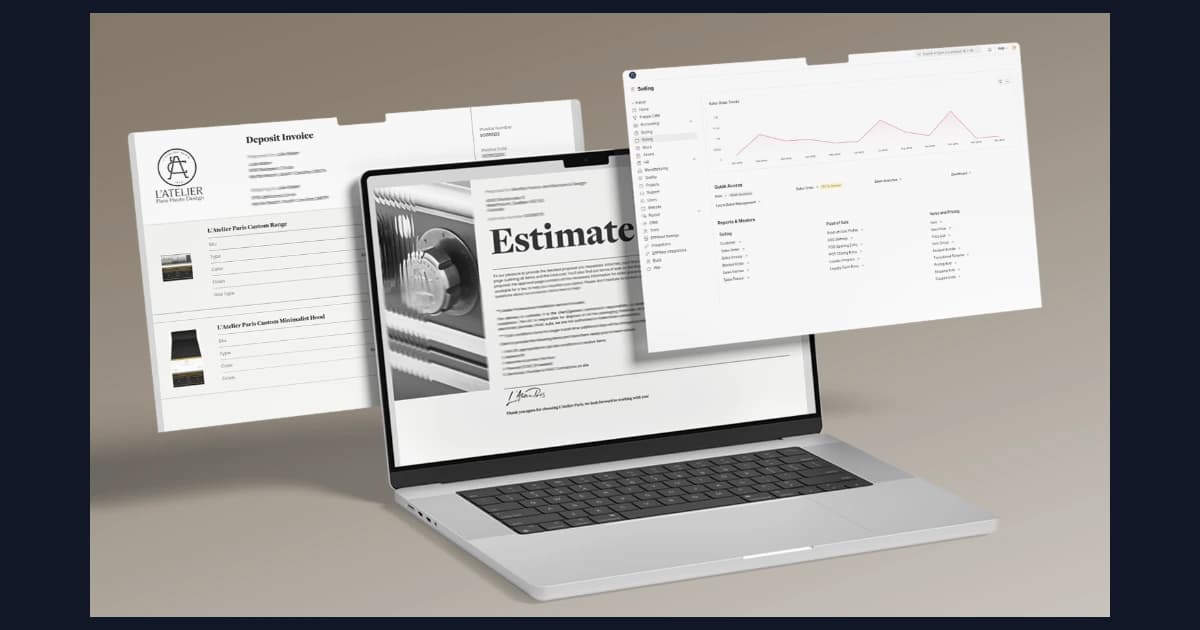
After evaluating several ERP options, ERPNext emerged as the ideal fit. It offered the flexibility of open-source software combined with the structure of a full-scale ERP system. Hosted on Frappe Cloud, it provided the scalability needed for future growth without any hidden costs. Solvios Technology managed the entire process in a hands-on manner: Implementation: A tailored setup built around their actual workflows, rather than a standard off-the-shelf template. Integration: Our team connected all core business functions, including CRM, inventory, purchasing, manufacturing, accounting, and customer support. Migration: Handling large volumes of data was a complex task. We executed a phased migration from Salesforce, QuickBooks, and SOS Inventory while ensuring data accuracy at every step. Consultation: Ongoing support post-go-live to optimize automation, improve reporting, and assist with team training.
Results
The impact was visible quickly. Teams that previously switched between multiple tools were now operating from a single unified dashboard. Data aligned consistently, reports became more reliable, and managers no longer had to wait for delayed updates. Within just a few weeks, they saw clear improvements: Processing times reduced significantly Reports became faster and more accurate Software and maintenance costs decreased Decision-making improved as data was instantly accessible instead of scattered across systems
Project Details
Year
2025