2025
How Targeted PPC Campaigns Increased Conversions by 270% for a Local Septic Services Business
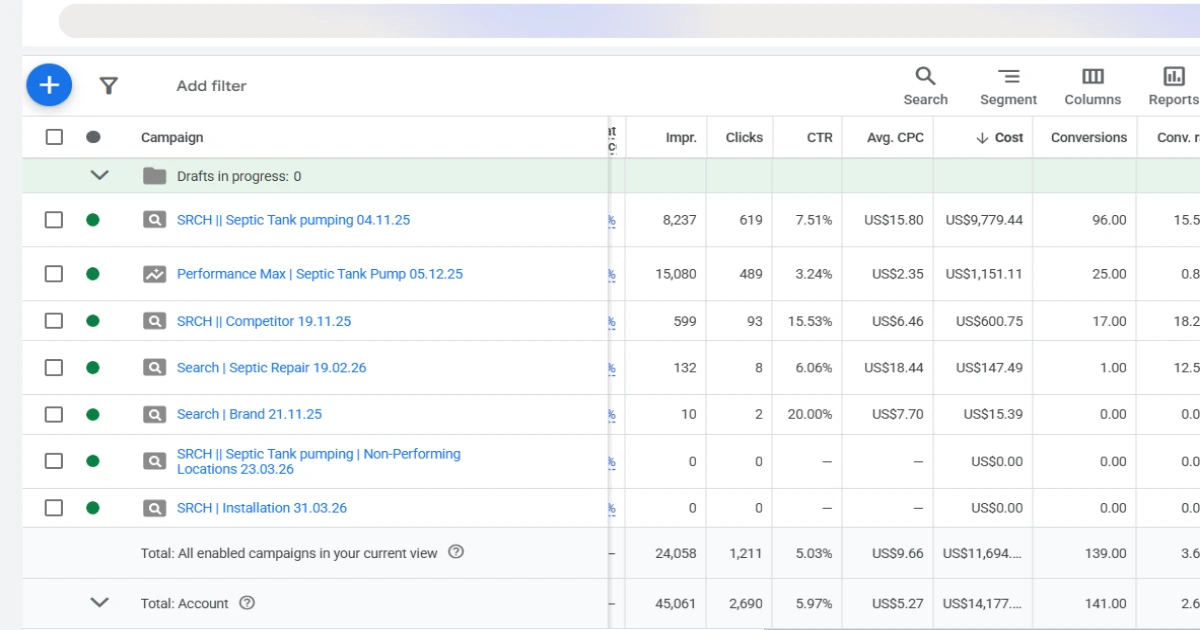
270.97%
Conversion Growth
111.2%
Clicks Increased
18.95%
Paid Traffic Increased
80.18%
Click Through Rate
48.9%
Impressions Increased
In the septic services industry, most customers search online only when they need immediate assistance with pumping, inspections, or system repairs. The goal of the campaign was to ensure that the business appeared prominently in Google search results whenever people searched for these urgent services within the service area. The PPC strategy focused on reaching high-intent customers, optimizing ad spend, and driving direct phone calls from people who were ready to book a service. Through structured campaign planning, location targeting, and continuous optimization, the advertising campaign was designed to generate qualified leads while maintaining cost efficiency.
Challenge
1. New Business in a Small Market The company was still building brand recognition in a relatively small geographic area. Because services were limited to a specific service radius, scaling the campaign without wasting budget required careful targeting. 2. High Cost Per Click (CPC) Septic-related keywords are highly competitive and often searched during emergencies. Some clicks were costing more than $20, making it important to control bidding and avoid unnecessary spending. 3. Limited Search Volume The service area covered approximately a 35-mile radius, which naturally limited the total number of searches available. Maximizing the value of every impression and click became essential for campaign success. 4. Low Initial Ad Visibility As a new advertiser, the campaign initially struggled to compete with established local businesses that already had an ad history and strong visibility in search results. 5. Budget Efficiency Pressure Because of the high CPC and limited market size, the campaign had very little room for trial and error. Every decision had to focus on generating qualified leads rather than simply increasing traffic. 6. Balancing Clicks and Conversions Generating a high number of clicks was not the primary goal. Instead, the focus was on attracting customers who were ready to book a service, ensuring that each click had a higher chance of converting.
Solution
1. Smart Budget and Bid Optimization Campaigns were restructured to prioritize high-performing keywords and locations. Bidding strategies were optimized to reduce high CPC costs while maintaining strong ad visibility. Budgets were allocated toward the services and regions producing the most conversions. 2. High-Intent Keyword Targeting The campaign focused on keywords that indicated immediate service needs, such as searches related to septic pumping, repairs, and inspections. Broad or low-converting keywords were removed to ensure that the budget was spent only on searches with strong purchase intent. Negative keywords were also added to prevent ads from appearing in irrelevant searches. 3. Precision Geo-Targeting The campaign targeted only the core service areas where the business actually operated. Location targeting was narrowed to ensure the advertising budget was not wasted on regions outside the service radius. 4. Call-Focused Ad Optimization Ads highlighted trust factors such as: Fast service availability Licensed professionals Reliable local expertise 5. Quality Score and Ad Performance Improvements Ad groups were structured around tightly grouped keywords to improve ad relevance. Landing pages were aligned with the keywords used in ads, helping increase Quality Score and improve ad ranking.
Results
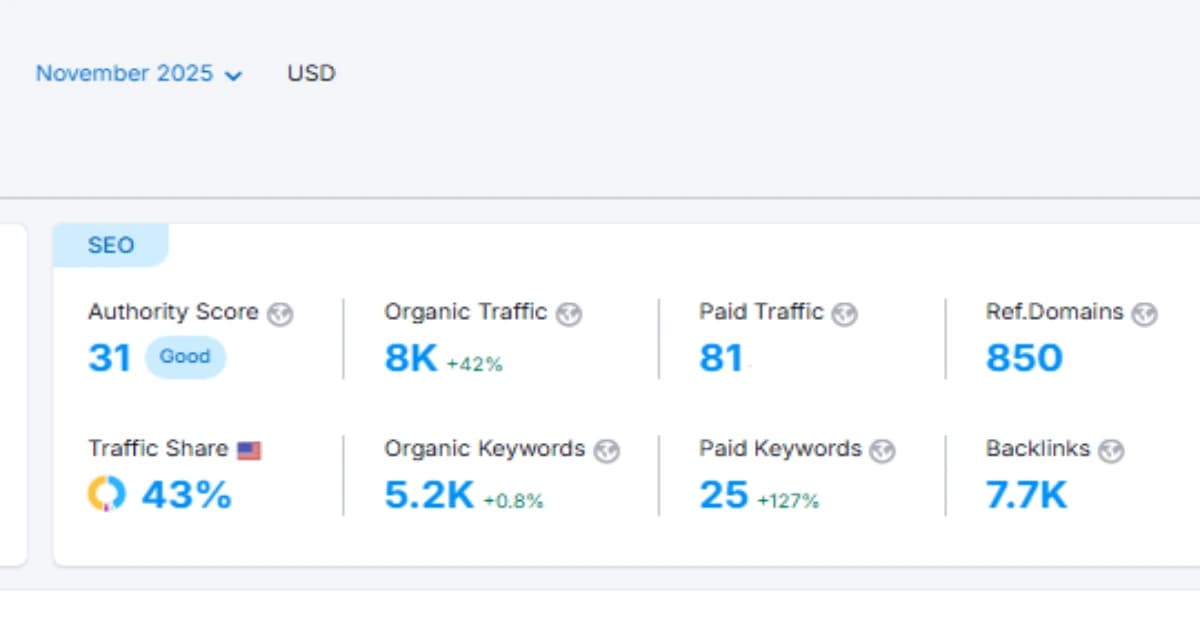
Paid Traffic Increased: 18.95% Click Through Rate: 80.18% Conversion Growth: +270.97% The campaign successfully generated consistent service inquiries and improved overall return on advertising spend.
Customer Project Goals & KPIs
1. Traffic Growth Increase the number of people visiting the website through paid ads. 2. CTR Improve how many people click on ads after seeing them. 3. Conversion Rate Turn more clicks into actual calls or service bookings. 4. Cost Per Conversion Reduce the cost needed to get each lead or customer.
PPC Execution Process
1. Market and Competitor Research The campaign began with an analysis of local search demand, competitor ads, and average cost per click within the service area. 2. Structured Campaign Architecture Instead of running broad campaigns, ad groups were created around specific services such as septic pumping, maintenance, and inspections. 3. Intent-Based Keyword Selection Only keywords showing strong purchase intent were selected. Low-performing or expensive keywords that did not generate conversions were removed or paused. 4. Negative Keyword Implementation Negative keywords were added to block irrelevant search queries, which helped prevent wasted ad spend and improved overall click quality. 5. Location Targeting Optimization The campaign targeted only the primary service radius to ensure ads were shown to users who could actually become customers. Nearby regions outside the service area were excluded from targeting. 6. Ad Copy and Call Extension Setup Urgency-driven ad copy was written to encourage users to contact the business immediately. Call extensions were added so users could place a phone call directly from the ad. 7. Landing Page Alignment Ads were matched with relevant landing pages to improve user experience and Quality Score. Better alignment between ads and landing pages also helped increase conversion rates. 8. Ongoing Bid and Budget Optimization Campaigns were monitored daily, and bids were adjusted based on performance. More budget was directed toward the highest-performing keywords and locations. 9. Performance Tracking and Reporting Key metrics such as calls, click-through rates, and cost per conversion were tracked regularly. Monthly performance analysis helped refine the campaign strategy and improve ROI over time.
Client Success Perspective
Before implementing the optimized PPC strategy, the business struggled to generate consistent calls from paid advertising. After restructuring the campaigns, focusing on high-intent keywords, and improving ad targeting, the advertising performance improved significantly. The campaign began generating more qualified leads, better call volume, and stronger overall visibility in search results. Over time, the PPC campaign became a reliable source of new customer inquiries and service bookings.
Key PPC Takeaways
1. Focus on High-Intent Keywords Targeting search terms that show strong buying intent leads to better conversions and reduces wasted ad spend. 2.Smart Budget Allocation Matters in Small Markets In smaller service areas, careful location targeting and bid adjustments help maximize every advertising dollar. 3.Strong Ad Messaging Encourages Action Clear and urgency-driven ad copy increases the likelihood that users will call immediately when they need help. 4. Continuous Optimization Drives Long-Term Results Successful PPC campaigns require ongoing monitoring, keyword adjustments, and performance optimization to improve results over time.
Project Details
Year
2025