Construction Staffing Marketplace | TradeFlex
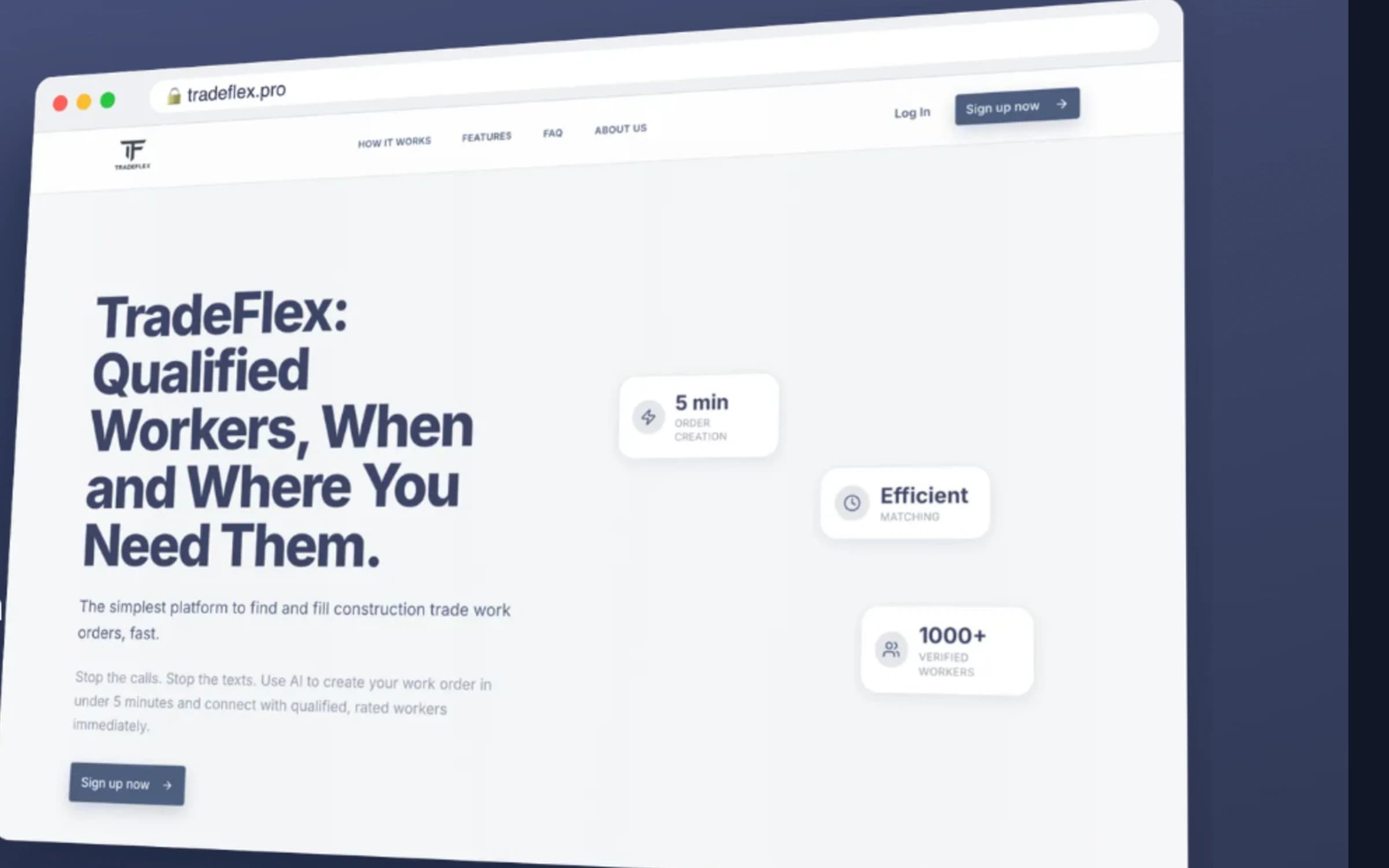
TradeFlex is a US two-sided marketplace for construction trades. Companies post work orders, and independent tradespeople and crews apply, work, log hours and get paid. The first market is HVAC in North Carolina.
Brocoders ran discovery, built the MVP and is now delivering Phase 2. The product went from kick-off to closed beta in 10 weeks.
Launch a product
TradeFlex needed to replace manual subcontractor staffing, which means constant texts, emails and contracts, and middlemen who charge a 35–45% premium on workers’ pay. The founders wanted companies to post work orders directly, qualified contractors to apply, and the platform to handle hours, invoices and payouts. The goal was to cut the time companies spend on subcontractor staffing by 80%. They needed a working beta fast and a production launch on their own AWS.
The agency's contribution
Brocoders was responsible for product discovery, MVP development, the Phase 2 build and project management. That included requirements, architecture, design specification, backend, frontend, QA and the AI feature. The team of 2–5 people (PM, backend, frontend, QA) ran weekly Friday demos and written status reports.
What was delivered
By delivery milestones, production status and platform and customer counts: 10 weeks from kick-off to closed beta 8 weeks to the full work order lifecycle working end to end Production in January 2026 2 customers on the platform 5.0 Clutch rating from the client for quality, schedule, cost and referral
Measurement period: October 2, 2025 (kick-off) to October 2026.
Context and limitations: Platform usage is still early: the founders are finishing Phase 2 before ramping up sales and marketing. The budget is confidential. The MVP was shipped on Express and rebuilt on NestJS in Phase 2 to protect the beta date. Some admin features were moved to the backlog to keep the MVP within budget.
Challenge
Construction demand swings from month to month, so companies fill gaps with hourly subcontractors or temp agencies. The founders wanted to remove the middleman and cut the time companies spend on subcontractor staffing.
The main challenges were:
Subcontractor management was manual (texts, emails, contracts) and often involved an agency charging a 35–45% premium on workers’ pay. The product needed a complete work order lifecycle: posting, applications, hours, invoicing, payouts and ratings. The MVP had to fit a fixed budget and a beta date. Job requests usually arrived as a few lines of free text in an email. The first large customer needed to work with its own vetted contractors.
Solution
Brocoders started with a 2-week discovery of 3 workshops, which produced a roughly 42-page requirements specification. The MVP scope was agreed against the budget before the build began.
The solution included:
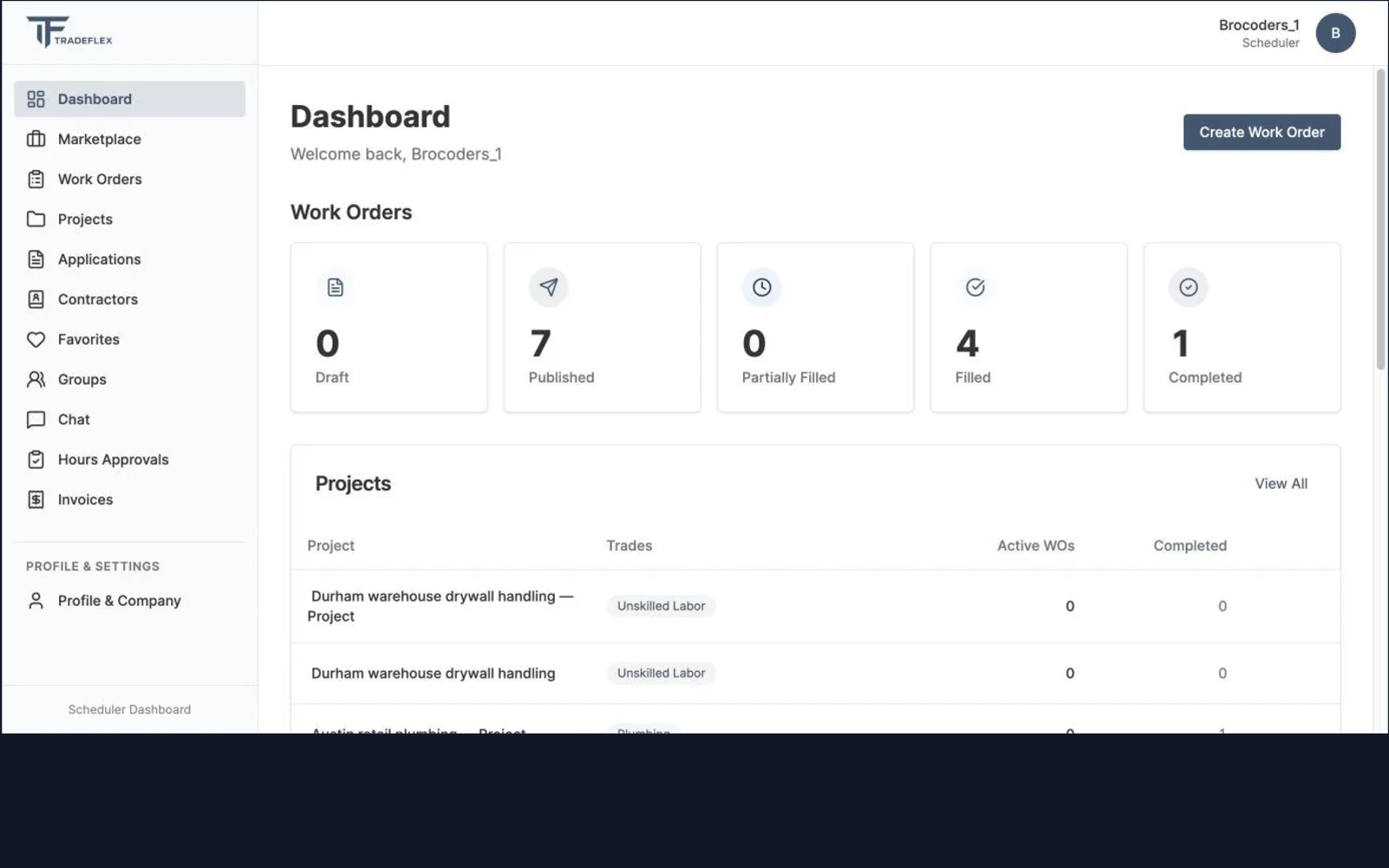
Work orders with trade, location, dates, rate and headcount. Applications from individual contractors and crews, with company approval. Hours submission and approval, with invoices generated from approved hours. Two-way ratings and email notifications through AWS SES. An admin panel for managing users and work orders. “Smart Fill”, an AI assistant that turns a pasted job request into a structured work order and asks clarifying questions. Phase 2 payments through Stripe Connect (ACH) with subscriptions, plus Firebase-based chat. Contractor groups, crew accounts with direct payment, and contractor document verification. Admin-created work orders and dispute handling. A backend move from Express to NestJS. Spec-driven development with AI coding tools, weekly demos and written recaps.
Results
Kick-off to closed beta in 10 weeks, with the full work order lifecycle working end to end after 8 weeks. Production launch on the client’s AWS in January 2026. Phase 2 (payments, chat, crews, verification) built and in final client testing in October 2026. 2 customers on the platform as of October 2026. 5.0 Clutch rating from the client for quality, schedule and cost.
Project Details
2025