VABS — Back-Office and Core Banking Platform
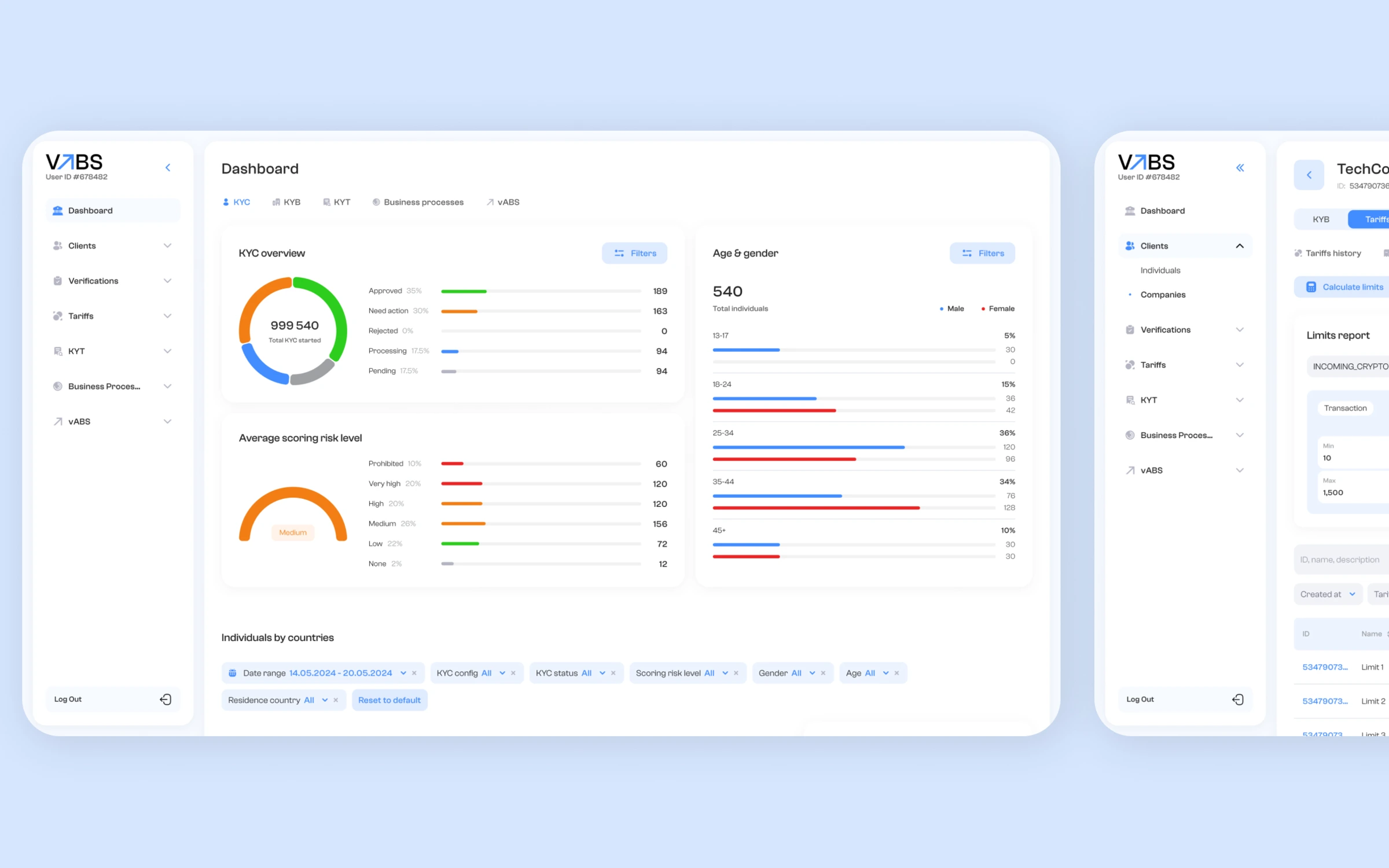
VABS is a back-office and core banking platform by ilink that unifies payments, accounting, compliance, risk management, customer data, and operational workflows. It helps fintech companies and financial institutions reduce manual work, improve visibility, and scale financial products through configurable modules and cloud or on-premise deployment.
Challenge
Fintech companies, payment institutions, banks, and lenders often manage payments, customer data, accounting, compliance, risk controls, pricing, and reporting through separate systems. This fragmented infrastructure creates duplicate work, inconsistent information, slower reconciliation, limited operational visibility, and high integration costs. It also makes it more difficult to introduce new financial products and scale operations across markets.
Solution
ilink developed VABS, a back-office and core banking platform that centralizes financial operations in one configurable environment which can be used according to the White Label model.
The platform supports SWIFT, SEPA, BSB, IFSC, internal, B2B, P2P, recurring, and bulk payments. It combines multi-currency accounting, reconciliation, payment routing, customer management, configurable tariffs, fees, spreads, limits, and approval workflows.
VABS also includes KYC and KYB processes, sanctions and PEP screening, adverse-media checks, KYT monitoring, transaction controls, risk scoring, alerts, and maker-checker approvals. A unified customer view gives operational, compliance, support, and risk teams access to relevant account and transaction information.
The platform can be deployed in the cloud or on-premise, depending on the client’s infrastructure, security, and data-control requirements.
Results
VABS enables financial organizations to replace fragmented operational systems with a unified platform. It improves visibility across customers, payments, compliance, and financial operations while reducing the amount of manual work required for routine processes.
The modular architecture allows clients to launch the functionality they need first and later add cards, deposits, lending, CRM, reporting, customer segmentation, and additional payment integrations. This helps businesses modernize their infrastructure without replacing the entire platform as their product portfolio grows.