Expert to Know: Anthony Awadalla
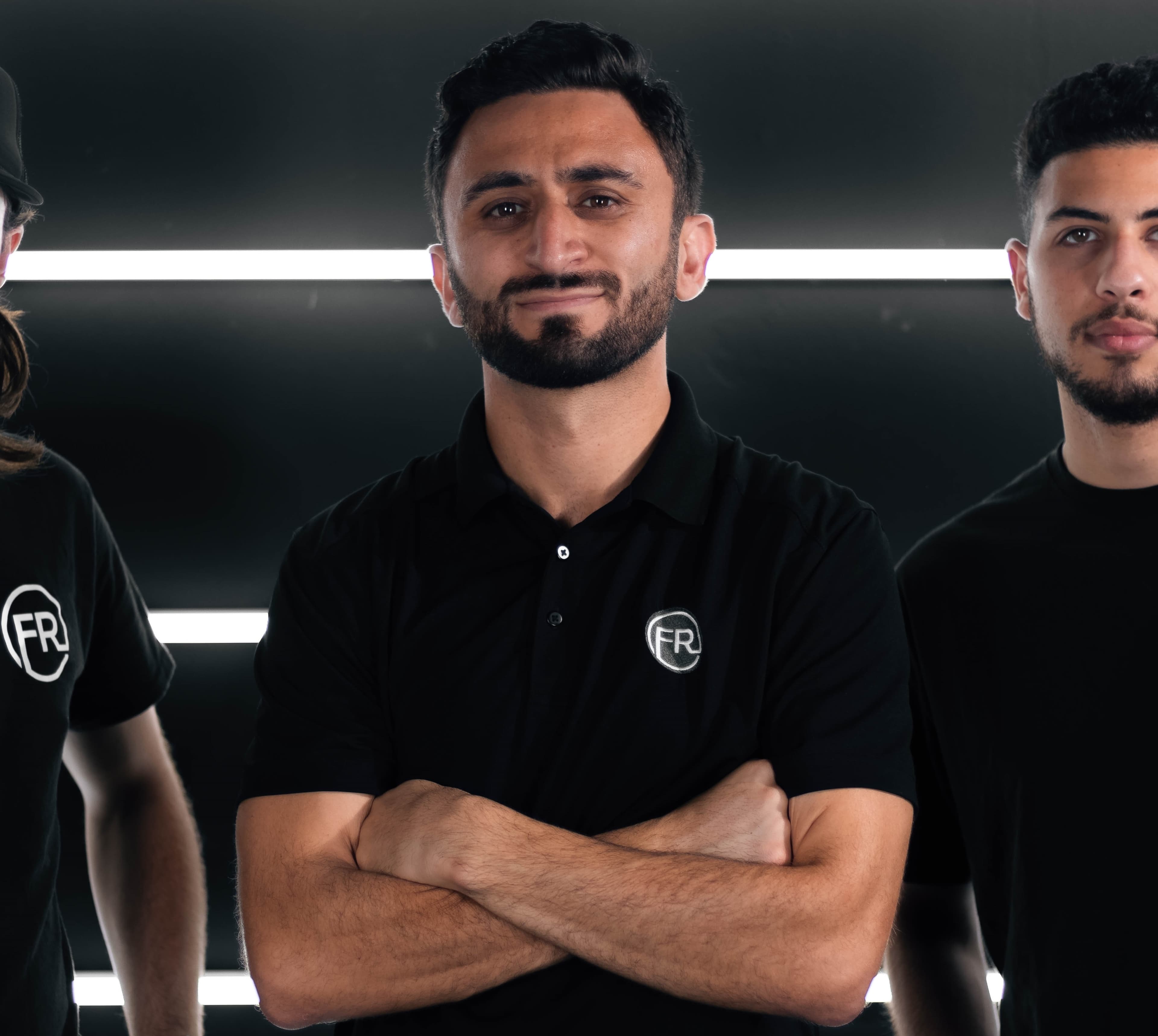
What's the backstory behind starting or joining your agency?
Looking back, Feel Right Inc. started long before it had a name.
Growing up, my cousins and I spent our summers making funny movies together. We'd come up with ridiculous storylines, assign ourselves different characters, and spend the entire day filming whatever we could think of. None of us realized it at the time, but those homemade videos were my first introduction to storytelling.
When I was in fifth grade, my mom bought me my first video camera, and that's when everything changed. I became fascinated with capturing everyday moments and then spending hours figuring out how editing could completely transform them. Using early Microsoft editing software, I'd experiment with music, sound effects, transitions, and anything else I could learn to make our videos funnier and more entertaining.
From that point on, I became "the video guy."
I brought a camera everywhere. Family vacations, birthdays, school events, weekends with friends. If something was happening, I wanted to document it. In high school, I naturally became the person everyone turned to for video projects because I genuinely loved taking raw footage and shaping it into a story.
By college in 2011, I realized people were willing to pay for that skill. I started a small editing business creating wedding films, slideshows, and promotional videos for local businesses. What began as freelance editing gradually evolved into directing, producing, and eventually building Feel Right Inc.
Today, that one-person editing business has grown into an international commercial video production company producing campaigns for consumer brands across North America, Europe, and the Middle East.
As the company has grown, so has my perspective on what clients truly value. Beautiful cinematography is expected. What matters most is helping marketing teams find the right creative direction before production ever begins. We spend just as much time listening, asking questions, and developing ideas as we do behind the camera.
Today, Feel Right Inc. exists to bridge the gap between marketing strategy and cinematic storytelling, helping brands transform business objectives into memorable commercial campaigns.
What was your first entrepreneurial moment?
My first entrepreneurial moment happened when I was nineteen years old.
My older cousin hired me to create videos for his engagement party, wedding, and real estate business. When he told me to "send an invoice," I had no idea how to do that. That project became an unexpected crash course in business and eventually led me to register my first company.
Looking back, the payment itself wasn't what changed me. It was realizing that something I genuinely loved doing could create value for someone else. That experience completely changed how I viewed creativity - not just as an artistic pursuit, but as something capable of solving business problems.
How do you define success today?
Success is producing something I'm genuinely proud of.
I love creating commercials that feel distinct from everything else in the market. There is so much content competing for attention that it's incredibly satisfying when an idea cuts through because it was thoughtfully developed and well executed. Those are the projects that stay with me. Writing and developing concepts that are unique and that win for the client is the perfect blend of true success.
I'm also motivated by building teams. Some of the most rewarding moments are bringing together incredibly talented directors, cinematographers, producers, writers, and editors who challenge each other to make something better than any one person could create on their own.
Of course, it's always rewarding when a client tells us we're the best production company they've worked with, but what matters more is that they come back. Long-term relationships are usually the result of consistently doing good work, communicating well, and making the process enjoyable.
For me, success is finding that balance between seeing my clients win, creating work that fulfills me creatively, and surrounding myself with people who constantly raise the bar.
What are the most energizing moments in your work?
Everyone assumes it's being on set.
Honestly, it usually isn't.
The moments I enjoy most happen before production, when a client brings us a marketing objective and we start pulling it apart. I love asking questions, exploring different directions, and watching an idea slowly take shape.
There's a point where everyone in the room starts seeing the same campaign. That's one of my favorite moments because production becomes execution instead of experimentation.
Of course I love seeing the final commercial, but I get just as much satisfaction from seeing how close from inception we arrived at the idea together. It is a journey and we truly have so much fun together with our clients.
Describe your typical daily routine.
No two days look the same, which is probably why I still enjoy doing this. It all depends on where things are at in a particular project's life cycle.
Some mornings start with emails, text messages or meetings discussing a potential project, producing a project, or finishing up a project. Activities can include reviewing treatments, budgets, or production schedules. Depending on the week, we could be writing a concept deck, walking a location, jumping on calls with clients overseas, or sitting with an editor refining a cut.
Lately I've also spent a lot of time studying SEO, AI search, and how people discover creative partners online. Building the company today means thinking just as much about marketing, systems, and long-term strategy as it does about production itself.
Every day is different, but it almost always comes back to solving problems and building something better than yesterday.
Any personal rituals or habits that contribute to your success?
One thing that's always driven me is the belief that there's always more to learn. I don't think you ever reach a point where you've "figured it out." I think it's a journey that you go through. When I'm busy with projects I'm head down in the trenches but when things slow down I try to work on things that will lead to more success whether that's studying emerging trends in commercial production, following conversations around marketing and AI, meeting with other production company owners, listening to podcasts, or simply talking with clients about how their brands are evolving.
Some of my best insights don't come from inside the production industry at all. They come from understanding how marketing directors think, how consumer behavior changes, and where advertising is headed. Those conversations help us stay relevant and ensure we're not just producing great-looking work, but creating campaigns that fit the way people actually consume content today.
At the end of the day, consistency matters more than anything. The only way to survive is to stay curious, listen more, and never becoming complacent. The industry changes constantly. There's always another idea to explore, another process to improve, and another opportunity to get a little better than yesterday.
How does your agency differentiate itself from competitors?
I think our biggest differentiator is the way we build relationships.
This business is built on trust, and I take that responsibility personally. I'm incredibly accessible to my clients, probably more than I should be. Whether it's a late-night text, a weekend phone call, or a question during pre-production, I believe great communication removes uncertainty. Clients should never wonder where their project stands or whether they can reach the person leading it.
Beyond that, I've spent the last decade building a global network of directors, cinematographers, producers, artists, and crew. Every project is different, and one of the skills I've developed over the years is knowing who the right people are for a particular concept. It's rarely about hiring the biggest name. It's about finding the right creative fit.
That network also allows us to produce almost anywhere in the world. We've built trusted relationships with talented filmmakers across different countries, making it possible to assemble high-performing teams without compromising quality or the creative vision.
Finally, I think our clients appreciate that we don't simply execute ideas—we help shape them. We spend a lot of time listening, asking questions, and developing concepts before production begins. That combination of strategic thinking, strong communication, and access to exceptional creative talent allows us to tackle projects that are both creatively ambitious and grounded in real marketing objectives.
What core principles and values guide your agency?
One of the values I've tried to build Feel Right Inc. around is ownership.
Whether we're producing a small product video or an international commercial campaign, we approach every project as if our name is attached to it, because it is. That mindset influences every decision we make, from the creative ideas we recommend to the way we communicate with clients throughout production.
Another principle is transparency. I believe the best partnerships are built on honest conversations. If I think an idea can be stronger, I'll say so. If something isn't the right creative direction, I'd rather have that discussion early than simply tell a client what they want to hear. I've found that open dialogue builds trust, and trust ultimately leads to better work.
What's your approach to hiring and building a team?
I think one of my strengths is having a strong eye for taste and quality. After 10 years of producing commercials, I can usually tell within moments whether a concept, dp, director, portfolio, location, casting choice, or creative direction is right for the project. That instinct comes from years of repetition, working with hundreds of talented creatives, and constantly refining my own taste. It's muscle memory and an inner voice that only comes from repetition. Building the right team is less about finding the biggest names and more about finding the right people for the idea.
What types of clients or projects do you say no to?
Where we tend to pass is when there's no room for collaboration or trust. The best work happens when clients are open to ideas, honest conversations, and building something together. If the relationship is purely transactional or the creative process isn't valued, we're probably not the right fit.
We also try to avoid taking on projects where we know we can't genuinely add value. If another production company is better suited for a particular style, budget, or scope, I'd rather be honest upfront than overpromise. Long-term relationships are more important to us than winning every project.
What marketing or industry trends do you think are overhyped?
I don't think any particular format is overhyped. AI, UGC, vertical video, and short-form content all have their place when they're solving the right marketing objective.
What I do think is overhyped is the idea that one creative approach can solve every problem. Every few years the industry latches onto a new trend and suddenly every brand feels like they need to do the same thing.
The best marketing usually isn't about following trends. It's about understanding your audience, your product, and choosing the creative approach that makes the most sense for that specific campaign. Sometimes that's a polished commercial. Sometimes it's creator content. Sometimes it's AI. The strategy should determine the execution, not the other way around.
What do you predict for the industry in the next 5-10 years?
I think we're moving toward a world where production becomes easier, but creative judgment becomes significantly more valuable.
AI will continue changing how we write, edit, plan, and even produce content. The technical barriers to creating videos will continue to fall, which means there will be more content than ever before. That also means it will become increasingly difficult to create work that genuinely stands out.
I also think marketing teams will expect more from their production partners. Instead of hiring someone simply to execute an idea, they'll look for partners who can help shape the campaign from the beginning, understand business objectives, develop creative concepts, and produce an entire ecosystem of deliverables across multiple platforms.
Finally, I think relationships will become even more important. As technology makes production more accessible, trust, taste, communication, and strategic thinking will become the biggest differentiators. Those are the things AI can't replace. Great ideas still come from understanding people, and I don't see that changing anytime soon.
What advice would you give someone starting an agency today?
If I were starting an agency today, I'd spend time working at one first. You can learn in a year inside a great agency what might otherwise take years of trial and error on your own. Watching how experienced people manage clients, budgets, productions, and relationships is invaluable.
I'd also be honest with myself about where I am. Early on, your biggest advantage isn't pretending to be bigger than you are - it's being willing to outwork everyone else. I'd offer my services for free or at a reduced rate if it meant building a portfolio that genuinely reflected the type of work I wanted to attract. Every great agency starts somewhere.
Finally, I'd focus relentlessly on creating value before asking for anything in return. Reach out to brands, founders, creators, athletes, celebrities or influencers you admire and find a way to help them with video. Perhaps it's spec work.
If you keep learning, keep improving your craft, and genuinely care about helping other people succeed, the work has a way of compounding over time.
What's your agency's pricing philosophy?
Our pricing philosophy is simple: the scope should fit the budget, not the other way around.
One piece of advice that has always stuck with me is that when a client can't make the budget work, the first conversation shouldn't be about lowering the price. It should be about adjusting the scope. Every deliverable, shoot day, location, creative concept, or revision has a real cost behind it, and I'd rather be transparent about those tradeoffs than promise the same level of work for less.
We work closely with clients to build a production plan that aligns with both their marketing objectives and their budget. Sometimes that means simplifying the approach. The goal is always to maximize value without compromising the quality of the final product.
At the end of the day, we don't sell production days - we build solutions. Our job is to recommend the approach that gives the client the greatest return on their investment while being honest about what's required to execute it well.
How do you balance growth with sustainability?
I'm naturally ambitious, so balancing growth with sustainability is something I think about often. Over the years I've realized that saying yes to everything isn't actually growth. Sustainable growth comes from building better systems, surrounding yourself with exceptional people, continuing to learn, and protecting the quality of the work. Our reputation is our greatest asset, and every project either strengthens it or weakens it. I'd rather grow steadily while producing work we're genuinely proud of than grow quickly by sacrificing the standards we've spent years building.
What are the essential software tools your agency relies on?
We try to keep our software stack simple and focused on collaboration.
For post-production, we primarily use Adobe Creative Cloud, including Premiere Pro, After Effects, Photoshop, Lightroom, Illustrator, and Audition. Depending on the project, our team also works in DaVinci Resolve for color grading, Blender and Cinema 4D for 3D workflows, and a variety of AI-powered creative tools that help accelerate concept development, storyboarding, and production planning.
On the business side, we rely on Google Workspace, Frame.io, Dropbox, Slack, Zoom, Notion, and QuickBooks to keep projects organized and clients informed throughout production.
Ultimately, the software isn't what differentiates us—it's how we use it. The right tools help us communicate more clearly, collaborate more efficiently, and spend more time focused on creative thinking rather than administrative work.
Remote, hybrid, or in-office — what works for your team and why?
We're a hybrid company by design.
Creative development, discovery, scripting, budgeting, post production, and client communication often happen remotely, allowing us to collaborate with talented creatives regardless of where they're located. Over the last decade, we've built a trusted network of directors, producers, cinematographers, editors, and artists around the world. That flexibility allows us to assemble the best team for each project instead of limiting ourselves to one geographic area.
When it's time for production, everything changes. That's where being in person matters most. From location scouts and pre production meetings to filming and client reviews on set, we believe the best productions happen face to face.
For us, it's not about being remote or in office. It's about choosing the right way to collaborate for each stage of the project. Technology allows us to work globally, while production is still a hands on craft that thrives on people being together, solving problems, and making creative decisions in real time. That approach has allowed us to produce campaigns almost anywhere in the world while maintaining the same level of quality, communication, and collaboration our clients expect.
What's a belief you hold about the industry that most would disagree with?
I think production has become commoditized.
That's probably not something most production companies would say, but I believe it's true.
Technology has made it easier than ever to create beautiful images. Great cameras are more accessible, AI is accelerating workflows, and talented filmmakers exist all over the world.
What has become much harder to commoditize is creative judgment.
Understanding a client's business. Listening before prescribing. Developing the right concept. Knowing which idea is worth investing in. Building trust before production even begins.
I think the companies that thrive over the next decade won't be the ones with the biggest equipment list. They'll be the ones that consistently help marketing teams make better creative decisions.
That's where I believe the real value is.
What do clients often misunderstand about agency work?
I think what clients often don't see is everything that happens outside of the shoot day.
Production isn't just the people standing behind the camera. It's weeks of preparation across every department. Producers coordinating logistics, art departments sourcing and transporting props, assistants making equipment pickups and returns, location scouts driving across counties, wardrobe fittings, casting sessions, permits, insurance, schedules, revisions, and hundreds of small decisions that quietly keep everything moving. Hundreds if not thousands of touchpoints, text messages, emails, shared docs, calls, and meetings across dozens of people. It's hours and hours of work.
Most of that work happens before the client ever arrives on set, and much of it isn't glamorous. It's people waking up early, driving for hours, loading trucks, solving last-minute problems, and doing whatever it takes to make the production feel effortless.
I think that's why our industry is often misunderstood. When a commercial looks seamless, it's easy to assume it was easy to make. In reality, dozens of people have invested their time, expertise, and energy to create those few minutes on screen. My hope is that clients see they're not simply paying for a video. They're investing in an entire team of specialists whose work, much of it invisible, is what makes the final result possible.
I also think clients often underestimate the amount of risk agencies take on before a project even begins.
Long before a contract is signed, we've already invested time getting to know the client, understanding their business, developing ideas, preparing treatments, building budgets, assembling teams, and earning their trust. None of that work is guaranteed, but it's an investment we make because we believe strong partnerships start long before production.
What keeps you passionate about this industry?
I'm passionate because I still genuinely love the process. I love the moment an idea clicks. I love building teams around that idea. I love watching talented people bring it to life. I love being on set. I love seeing a client light up. And I love that no matter how much experience you have, there's always another lesson waiting on the next project. I don't think I'll ever lose that curiosity.