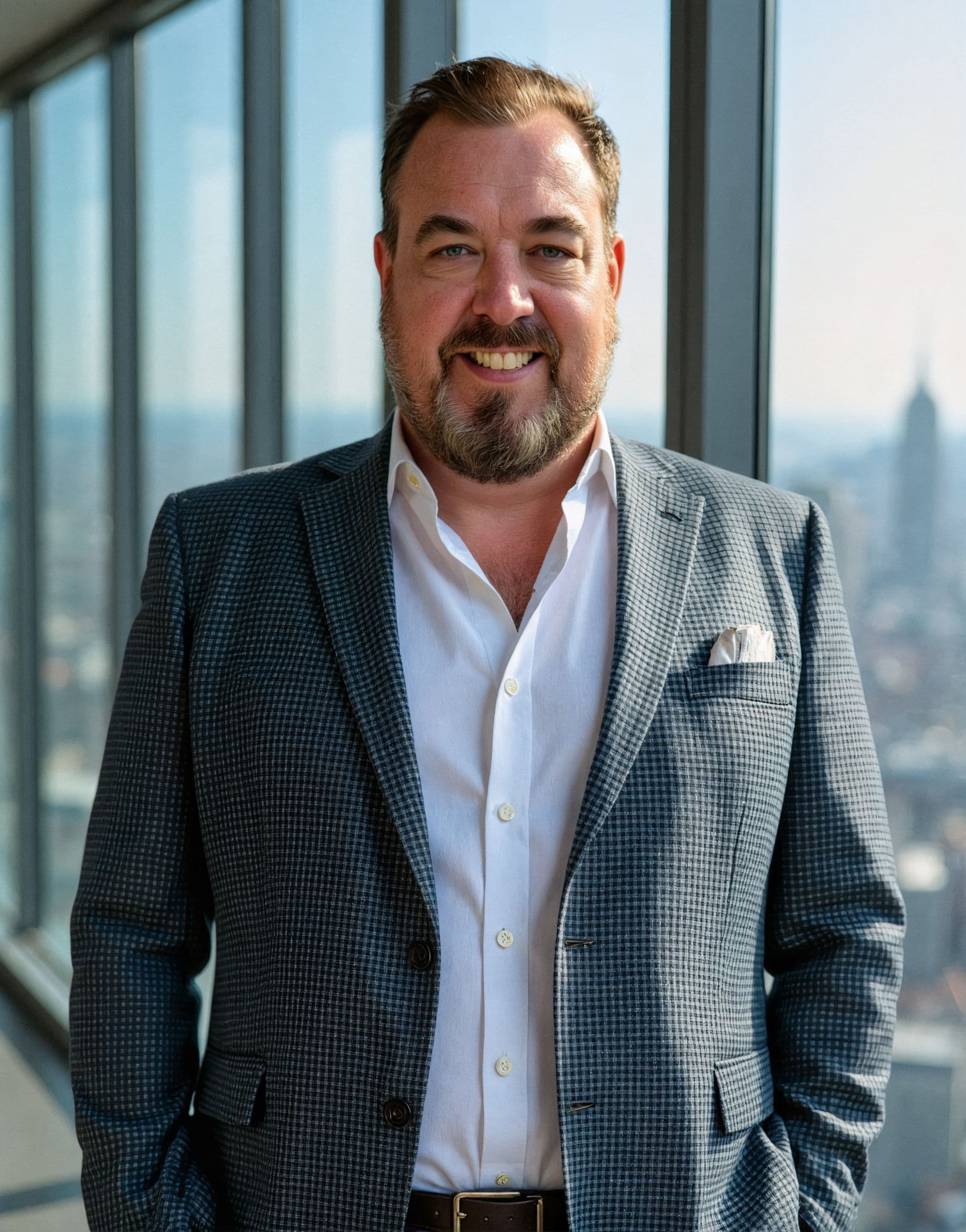
Expert to Know: Chris Breikss
What's the backstory behind starting or joining your agency?
I've been in digital marketing since 1998, so this isn't a second career or a pivot for me. It's all I've ever done. Rivetline came out of watching the AI search landscape shift in a way that reminded me of the early web, that feeling that something fundamental is changing and the window to get ahead of it is narrow. I'd spent 25 years building Major Tom into a serious agency, and I knew I wanted to build something lean and focused on what I believe is the most important shift in marketing since the dot-com era. Rivetline is that bet.
What was your first entrepreneurial moment?
I was maybe eight years old and our school ran a bottle drive with prizes for whoever raised the most money. I went all in. I didn't just knock on doors in my neighborhood. I mapped out a strategy, worked every angle I could think of, and ended up getting recognized in front of the whole school. Looking back, that moment had everything: a goal, a competitive field, public accountability, and the realization that effort and strategy together produce results that effort alone doesn't. I've been chasing that feeling ever since.
How do you define success today?
Success for me right now is showing up to my son's hockey practices and games. That sounds simple, but it's actually the result of a lot of intentional decisions about how I run my business and my life. When I have the flexibility to be present for the moments that matter, that tells me the business is working the way it should. Revenue matters. Growth matters. But if I'm missing the things I can't get back, I'm not winning.
What are the most energizing moments in your work?
Solving complex problems. There's a moment when something that looked impossible starts to unlock, and that's when I feel most alive professionally. Lately, a lot of those moments happen in collaboration with Claude. I know that sounds unconventional, but I work with Claude the way some people work with a great business partner: thinking out loud, pressure-testing ideas, building things that didn't exist an hour ago. The problems we're solving in AI visibility are genuinely hard, and having a thinking partner that never gets tired is something I don't take for granted.
Describe your typical daily routine.
I think of my day like a tennis match. My first move every morning is to hit the ball back into everyone else's court: respond to what needs a response, unblock what's blocked, move things forward for the people I work with. Once I've done that, I shift to my own objectives for the day. When people hit the ball back into my court, I pause, handle it, and get back to my work. It keeps things moving without letting other people's urgency constantly override my priorities. It's not a perfect system, but it's the closest thing I've found to staying both responsive and focused.
Any personal rituals or habits that contribute to your success?
"Perfect is the enemy of done." I come back to that constantly. In an industry that's moving as fast as ours is right now, waiting for perfect is how you miss the moment. You have to make hay while the sun shines. I'd rather ship something good today and improve it tomorrow than spend three weeks perfecting something that the market has already moved past. I've made a lot of mistakes operating this way, and I've also built a lot of things that wouldn't exist if I'd waited.
How does your agency differentiate itself from competitors?
We work on things we genuinely love and truly understand. I've been in digital marketing since 1998. This isn't what I do for a living. It's who I am. When AI search started reshaping how people find businesses, I didn't need to be convinced it was real. I felt it the same way I felt the web shift in the late nineties. Rivetline is built around that conviction, and clients feel the difference between working with someone who believes in the work and someone who's offering it as a service line.
What core principles and values guide your agency?
Be kind. Be fair. Do your best. Deliver on time and on budget. That's it. I've found that if you do quality work at a fair price and treat people well, referrals follow naturally. You don't have to manufacture reputation. You build it job by job. We're not trying to be everything to everyone. We're trying to be exactly what we say we are to the clients we choose to work with.
What's your approach to hiring and building a team?
A rising tide floats all boats. When we win, we win together, and that has to be real, not a poster on the wall. I want people around me who are genuinely invested in the outcome, not just completing tasks. I'd rather have a small team that's fully bought in than a large team going through the motions. As we grow, that standard doesn't get easier to maintain, but it's the one I'm least willing to compromise on.
What types of clients or projects do you say no to?
I need clients who genuinely believe the project is going to work, because if they don't, it won't. We're going to make mistakes. We're going to push limits and skin our knees and try things that don't land perfectly the first time. That process only works if there's real trust and buy-in on both sides. Anything deceptive or unethical is an obvious no. But the subtler no is the client who wants the result without the partnership. Those engagements don't end well for anyone.
What marketing or industry trends do you think are overhyped?
People sometimes say AI is overhyped. They're wrong. This is the biggest shift I've seen since the dot-com era, and I was there for that one. The reset button has been pushed. The playing field has been leveled in a way that only happens once or twice in a generation. The businesses that treat this as a trend to monitor are going to watch the businesses that treated it as infrastructure to build take their market share. I've seen this movie before. I know how it ends.
What do you predict for the industry in the next 5-10 years?
I think three years is the more useful window right now. The next three years are going to be about market share capture at a speed most businesses aren't prepared for. The small guys can compete with the big guys in AI search in a way they never could in traditional SEO. The infrastructure required isn't dependent on budget size. It's dependent on moving first and moving smart. The agencies and businesses that understand that right now are going to look very smart in 2027.
What advice would you give someone starting an agency today?
Do what you love. Not what's profitable, not what's trending: what you genuinely love and are ultimately good at. The market will find you if you're really good at something you care deeply about. Also ask yourself: are you a good marketer, or are you a good promoter? Because those are different skills. How does your ability show up in other areas of your life? The answer tells you a lot about whether you're building something real or performing something temporary.
What's your agency's pricing philosophy?
We price a little higher than the market, deliberately. Not to be exclusive, but to attract clients who understand the value of what we're doing and aren't making decisions based on who's cheapest. The lowest-bidder client relationship is hard on everyone. When a client chooses you because they believe in what you do, the whole engagement is different. Better work, better outcomes, better relationship. The price filters for the right fit.
How do you balance growth with sustainability?
Honestly, I haven't fully figured that out yet, and I'll let you know when I do. What I can tell you is that my current thinking is to grow as fast as we responsibly can, not for the sake of growth, but to build the infrastructure that makes sustainability possible. You can't build systems for a business that doesn't exist yet. So right now, the priority is getting to the scale where the right infrastructure makes sense, and then building it properly.
What are the essential software tools your agency relies on?
Slack for communication, Asana for project management, and Claude as my primary operating system. That last one isn't an exaggeration. Claude is how I think through problems, build client deliverables, manage complexity, and move fast without sacrificing quality. Most agencies are still figuring out how to incorporate AI into their workflow. We built our entire operation around it from day one.
Remote, hybrid, or in-office — what works for your team and why?
We're remote and hybrid right now, and it works. But I'm a genuine believer in the value of being together in person. Something real happens when people share a physical space: collaboration, culture, relationships that don't form over Slack. I think about the fact that a third of people meet their life partner at work. That's not a trivial thing to design out of a company. Building more of an in-person experience is something I want to invest in as Rivetline grows.
What's a belief you hold about the industry that most would disagree with?
That AI won't replace the need for great operators and great strategists. Everyone's either panicking that AI will take over or dismissing it as a tool. I think the truth is more nuanced. The mundane and repetitive work will be automated, and that's genuinely good. But someone still has to know what to build, why it matters, and how to adapt when things don't go according to plan. Strategy, judgment, and relationships are not automatable. The operators who learn to work alongside AI are going to be the most valuable people in the industry.
What do clients often misunderstand about agency work?
How long things actually take, and how much craft goes into making something look effortless. When we do our job well, it looks simple. That's the goal. But simple-looking outcomes are usually the product of a lot of invisible work: thinking, testing, adjusting, rebuilding. Every industry has this, but in ours the outputs are so visible and the timelines so compressed that the gap between expectation and reality can get wide fast. The best client relationships are the ones where there's genuine curiosity about the process, not just the result.
What keeps you passionate about this industry?
The evolution. The constant change. The fact that the strategy that worked two years ago might not work today, and that figuring out what works now requires real thinking and real creativity. I'm not someone who wants to optimize the same thing forever. I want to be in an industry that keeps moving, keeps surprising me, and keeps demanding that I grow. Digital marketing has never stopped doing that, and right now, with AI reshaping everything, it's more alive than it's ever been.