Expert to Know: Michael Dominick
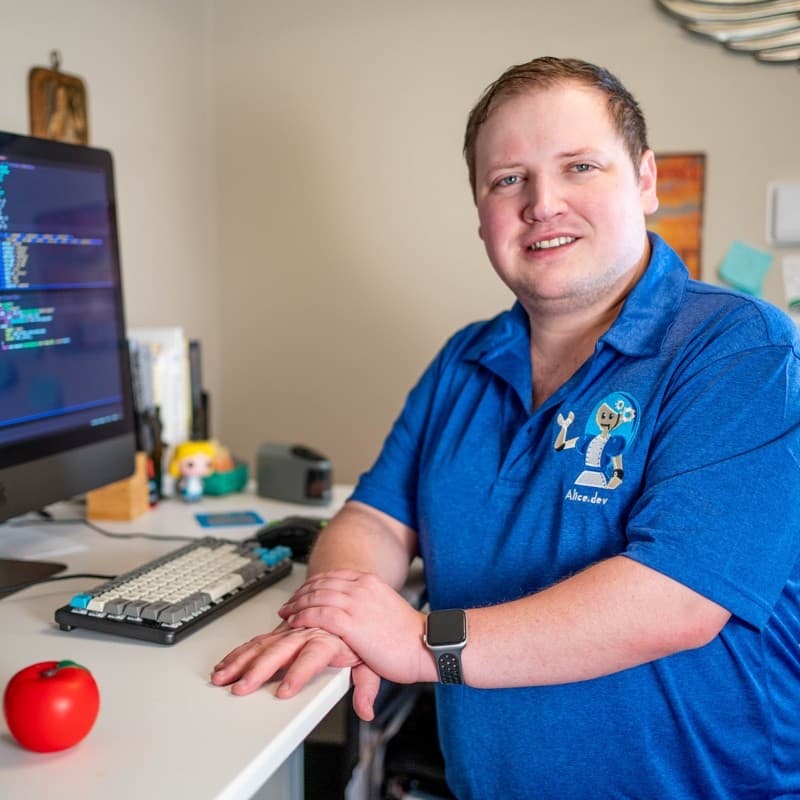
What's the backstory behind starting or joining your agency?
I started working on these type of enterprise avionics systems by accident. I was doing iPhone app development in the very first days of the App Store and someone I knew had someone that wanted to talk about the possibility of commercial mobile tech for military use.
What was your first entrepreneurial moment?
That's hard to say. I'm told that when I was very young - possibly 5 or 6 - I was trying to sell motorcycle gloves to friends of my father. I of course being a small child didn't have said gloves to sell!
How do you define success today?
Staying ahead of the curve and avoiding the trap of complacency.
What are the most energizing moments in your work?
I always like introducing a client to some new piece of tech or approach to a legacy system that they didn't know about.
Describe your typical daily routine.
Oh wow! That's tough. I tend to get up early when I can and review any emails that came in through the night, then I do some LinkedIn. After that it's a few hours of coding until the day's meetings start.
Any personal rituals or habits that contribute to your success?
I'm a believe in the Pomodoro method of working in short but focussed bursts.
How does your agency differentiate itself from competitors?
The Mad Botter is not a generalist development shop. We specialize in the messy, business-critical systems most agencies avoid: legacy databases, aging ERPs, shop-floor telemetry, and regulated operational data. We connect those systems to modern software and AI through secure, transparent, auditable pipelines that can run in the cloud, on-premises, or air-gapped. Our “glass box” philosophy gives clients visibility into exactly how their data is accessed and transformed, without vendor lock-in. We combine 100% US-based engineering, experience supporting U.S. Navy and Air Force programs, and deep expertise in hard-environment industries.
What core principles and values guide your agency?
We believe software should be understandable, durable, and accountable. That means building glass boxes, not black boxes: clients should see how their systems work, how their data moves, and why decisions are made. We prioritize reliability over hype, open standards over vendor lock-in, and measurable business outcomes over trendy technology. Security and data sovereignty are designed in from the start through least-privilege access, auditability, and flexible deployment. Above all, we value honest communication, senior-level craftsmanship, and leaving clients with systems they can truly own, operate, and trust.
What's your approach to hiring and building a team?
I hire more for passion and curiosity than resumes. I've also found little correlation if any between prestige of a graduating institution and passion.
What types of clients or projects do you say no to?
I won't do a project where someone is cashing out a 401K on their dream. I also prefer to be firmly in that serious B2B core.
What marketing or industry trends do you think are overhyped?
AI is just not at least in the foreseeable future going to replace good developers.
What do you predict for the industry in the next 5-10 years?
Increased integration between AI and IOT devices.
What advice would you give someone starting an agency today?
Don't be too scared of Claude Code and the like but you can't just sell development - you have to sell some sort of business outcome.
What's your agency's pricing philosophy?
We price around outcomes, clarity, and shared risk rather than simply selling developer hours. Most engagements begin with a fixed-price diagnostic or tightly scoped pilot so the client understands the architecture, cost, and expected business value before committing to a larger build. When implementation requirements are clear, we use milestone-based pricing; when discovery is still unfolding, we work transparently with agreed budgets and checkpoints. Our goal is straightforward: no artificially low bids, surprise change orders, or unnecessary long-term dependency. Clients should always know what they are paying for and why it matters.
What are the essential software tools your agency relies on?
We rely on tons of open-source, starting with Linux but also a lot of specialized IOT stuff. We've actually authored and open-sourced our internal IOT framework.
Remote, hybrid, or in-office — what works for your team and why?
Remote
What's a belief you hold about the industry that most would disagree with?
I think the endless race to commoditize and flush down to the bottom is making software worse and providing worse long-term outcomes for clients.
What do clients often misunderstand about agency work?
Clients often think they are buying code when they are really buying judgment, risk reduction, and a path through technical uncertainty. The most valuable work happens before the first line of code: clarifying the business problem, challenging assumptions, understanding legacy systems, and designing something maintainable. Clients also sometimes expect an agency to disappear for three months and return with the perfect answer. Strong outcomes require access to decision-makers, fast feedback, and honest collaboration as new facts emerge. The goal is not to produce the most output. It is to solve the right problem without creating the next expensive one.
What keeps you passionate about this industry?
It's always changing!