How Much Should a Small Business Spend on Marketing?
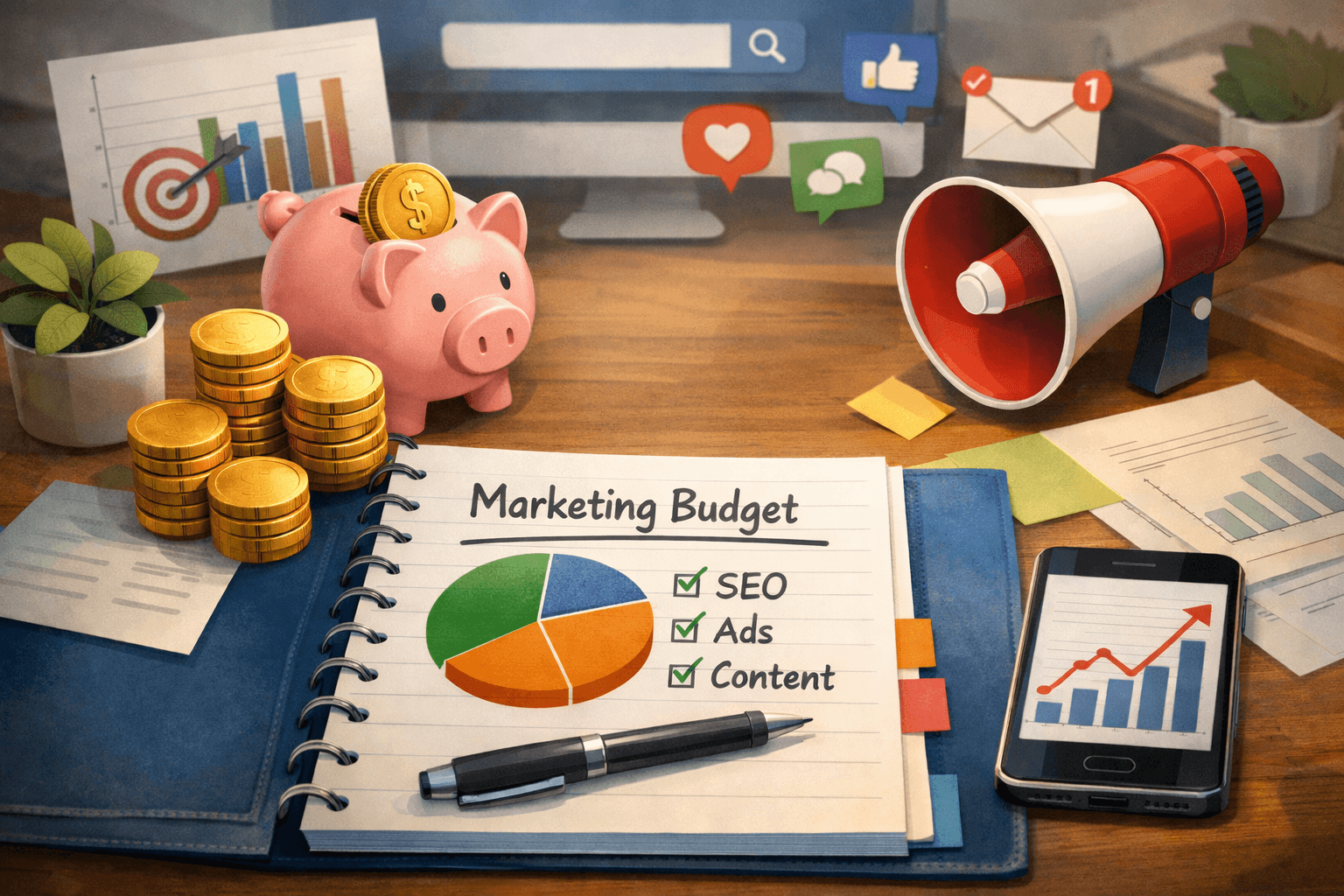
Small business owners ask this question all the time, and the honest answer is that there is no one-size-fits-all number. The right marketing budget depends on your revenue, growth goals, competition, margins, market awareness, and how quickly you need results.
What matters most is not choosing a random dollar amount. It is choosing a marketing budget that matches your stage of growth and then allocating it in a way that supports lead generation, brand visibility, and long-term return.
At Precision Marketing Partners, we usually encourage small businesses to stop asking, “What is everyone else spending?” and start asking, “What do we need to spend to hit our goals without wasting money?”
Key Takeaways
- Businesses trying to grow aggressively, enter a new market, or build awareness often need to spend more than businesses relying on referrals and repeat customers.
- The best marketing budget is not just about total spend. It is also about where the money goes and whether it supports channels that compound over time, such as SEO, content, website improvements, reputation management, and AI-search visibility.
- Marketing investment often works best when the business first strengthens its website, local visibility, and trust signals before scaling ad spend.
- A lower budget can still perform well when it is focused, consistent, and tied to measurable priorities instead of being spread too thin.
A Better Question: What Should Your Marketing Budget Accomplish?
Instead of choosing a budget first, define the outcome first.
Your marketing budget should support goals like:
- generating more qualified leads
- increasing organic visibility
- improving close rates through better trust signals
- building local awareness
- improving website conversion rates
- strengthening your reputation and reviews
- creating content that can rank in traditional search and appear in AI-generated answers
What Does a Small Business Marketing Budget Usually Need to Cover?
A lot of small businesses underestimate marketing because they only think about ads.
In reality, your marketing budget may need to cover:
Website ImprovementsA high-performing website is often the foundation of everything else. If traffic arrives and the site is slow, confusing, outdated, or not conversion-friendly, other marketing spend becomes less efficient.
Search Engine Optimization
SEO helps your business appear when people are actively searching for your services. It is one of the most important long-term investments for many small businesses because it builds visibility over time.
Generative Engine Optimization
More businesses now need content that performs not only in Google search results, but also in AI-generated answers and summaries. Precision Marketing Partners offers Generative Engine Optimization services, reflecting the shift toward content that AI systems can trust and surface.Content marketingBlogs, service page copy, FAQs, local landing pages, case studies, and educational resources can all support SEO, AI visibility, conversion, and trust.Paid CampaignsGoogle Ads, social ads, remarketing, and other paid channels can help drive immediate visibility, especially while organic visibility is still building.Reputation ManagementReviews and reputation signals often influence both click-through rates and conversion rates.
Social Media and Email Marketing
These channels can strengthen retention, repeat business, and brand recall, especially when paired with content and promotions.
How to Know if You Are Under-Spending on Marketing
A small business may be under-investing in marketing if:
- most leads depend on referrals alone
- your website gets traffic but does not convert
- your competitors dominate search results
- you are not showing up for high-intent service keywords
- your online reviews are weak or inconsistent
- your marketing activity is sporadic
- you expect fast growth from a very small budget
- you have no content strategy for search or AI discovery
Under-spending does not always mean you need a huge budget increase. Sometimes it means your budget is too fragmented, inconsistent, or focused on the wrong channels.
How to Know if You Are Over-Spending
A business may be over-spending when:
- there is no clear strategy behind campaigns
- metrics focus on vanity numbers instead of leads and revenue
- multiple vendors are doing overlapping work
- paid ads are running without landing page optimization
- content is being produced without a clear SEO or conversion purpose
- no one is tracking what channels actually drive qualified opportunities
Where Should Small Businesses Prioritize Budget First?
For many small businesses, the strongest priorities are:** 1. Website and conversion foundation**Before you scale traffic, make sure the site is clear, trustworthy, mobile-friendly, and built to convert.2. SEO and local visibilityIf people search for what you offer, search visibility should usually be a core part of your budget.3. Content that answers real customer questionsUseful, search-friendly content can support rankings, AI visibility, and lead nurturing at the same time.4. Reputation managementReviews help people choose you once they find you.5. Paid campaigns where speed matters
Paid search or social can be valuable when you need faster lead flow, promotions, or support for competitive keywords.
Should a Small Business Spend More on SEO or Paid Ads?
Usually, this should not be an either-or decision.
Paid ads can create immediate visibility. SEO and content can create lasting visibility that compounds over time. The best balance depends on how quickly you need leads and how competitive your market is.
A common approach looks like this:
- use paid campaigns for short-term lead generation and testing
- invest in SEO, content, and GEO for sustainable growth
- improve the website so both channels convert better
- build reviews and trust signals so traffic turns into inquiries
If the budget is limited, many small businesses benefit from building a strong owned foundation first rather than relying entirely on ad spend month after month.
How Often Should a Small Business Revisit Its Marketing Budget?
At minimum, revisit it:
- annually for strategic planning
- quarterly for performance review
- monthly for pacing and channel adjustments
If your revenue changes, your service mix changes, or your goals change, your marketing budget should change too.
For example, a company launching a new location or trying to grow market share may need to increase spend. A business with a stable pipeline and strong retention may choose a leaner approach.
The Best Marketing Budget Is One You Can Sustain and Measure
The right budget is not the biggest one. It is the one you can sustain long enough to build momentum and evaluate results honestly.
Marketing usually works best when it is:
- strategic
- consistent
- measured
- aligned with business goals
- spread across the right mix of short-term and long-term channels
That is especially true for small businesses that need every dollar to work harder.
Want help building a marketing budget that actually supports growth?
Precision Marketing Partners helps small businesses invest in the right mix of SEO, GEO, content, website improvements, and campaigns to turn marketing into measurable results. Book a free strategy call to build a smarter plan. Precision Marketing Partners currently highlights SEO, content marketing, website design/development, reputation management, digital campaigns, and GEO among its core services.