How to Create Content for Each Stage of the Buyer Journey
What Is the Buyer Journey?
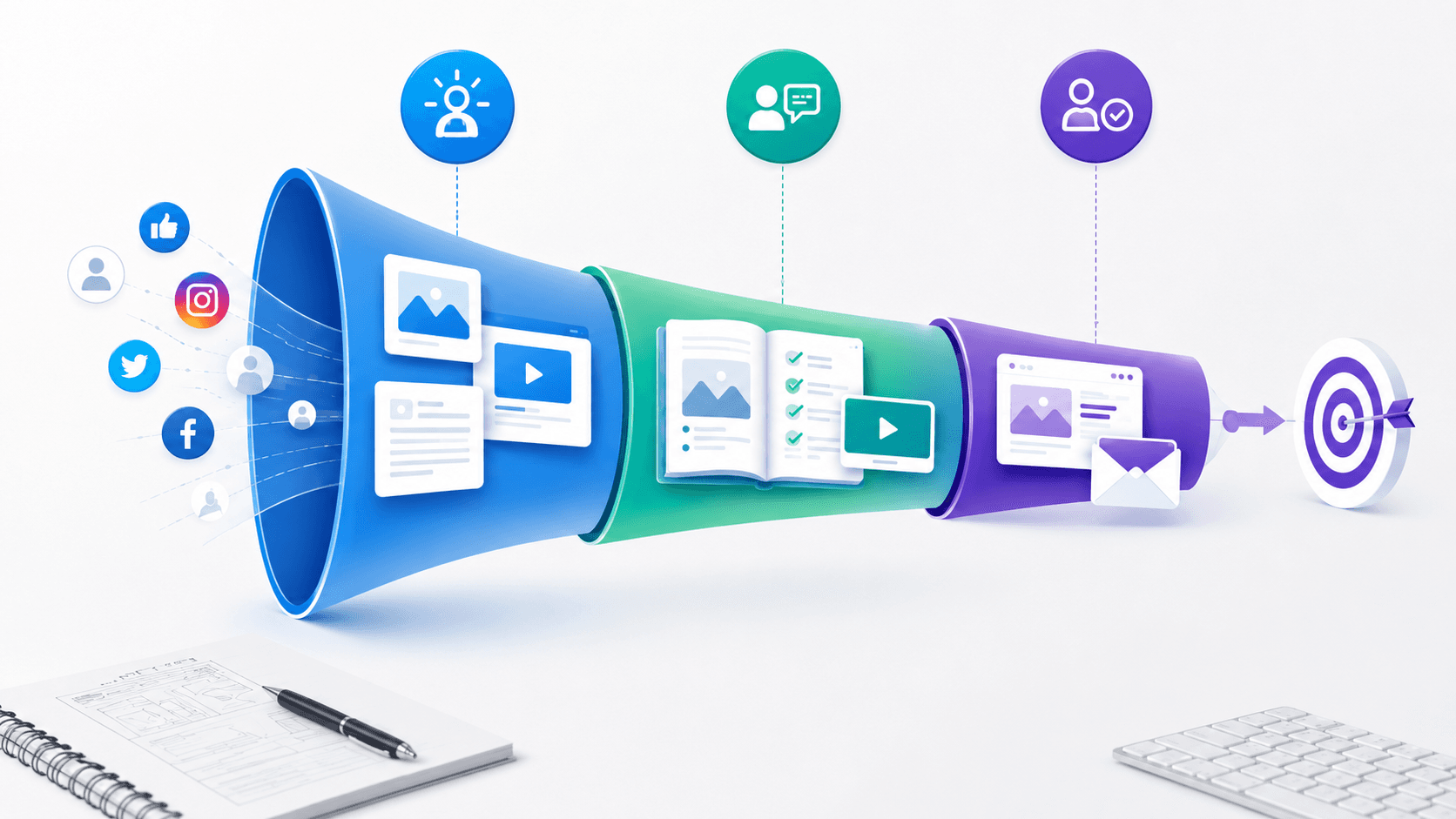
The buyer journey is the process a potential customer goes through from first recognizing a problem to making a purchase decision. It consists of three stages: awareness, consideration, and decision.
- Awareness: The buyer realizes they have a problem or need.
- Consideration: The buyer researches possible solutions and evaluates their options.
- Decision: The buyer chooses a specific product, service, or provider to solve their problem.
Each stage represents a different mindset, a different set of questions, and a different need for information. Content that resonates at the awareness stage will rarely convert someone who is ready to buy — and content built for the decision stage won't help someone who is still trying to understand their problem. Effective content marketing meets buyers where they are.
Why Small Businesses Need a Content Strategy for Every Stage
Most small businesses create content with one goal in mind: get more customers. That instinct is right, but the execution is often lopsided.
Many small business websites are heavy on decision-stage content (service pages, pricing, contact forms) and light on everything else. The result is a site that only resonates with people already ready to buy — and misses everyone in the earlier stages of their journey.
A full-funnel content marketing strategy changes that. When you create content for every stage, you:
- Attract new audiences who are just beginning to research
- Stay visible and relevant as they evaluate their options
- Build enough trust to earn their business when they're ready to decide
This approach is also increasingly important for visibility in AI-driven search. Google AI Overviews, ChatGPT, and similar tools are primarily triggered by informational queries, the kind of questions buyers ask in the awareness and consideration stages. Businesses that publish content answering those questions become the sources AI cites — and the names buyers remember.
Awareness Stage: Content That Attracts
What Is Awareness Stage Content?
Awareness stage content addresses the problems, questions, and pain points your audience has before they know what solution they need. At this stage, buyers are not looking for your business specifically. They are looking for answers.
A prospective dental patient might search "why do my gums bleed when I brush?" A small business owner might search "why is my website not getting traffic?" Neither of them is ready to book an appointment or call an agency yet. But if your content answers their question well, you become the first trusted voice in their decision-making process.
What Types of Content Work Best for Awareness?
- Blog posts and articles that answer common questions in your industry
- Educational guides explaining how something works or what causes a problem
- Social media content that sparks recognition of a need or challenge
- Short videos that explain a concept or demonstrate a problem
- Infographics that simplify complex information at a glance
What Should Awareness Content Do?
Awareness content should educate, not sell. The goal is to establish credibility, earn trust, and make your brand memorable — not to push a conversion before the buyer is ready.
Good awareness content:
- Answers a real, specific question your audience is asking
- Uses plain, accessible language (not jargon)
- Delivers value without requiring anything in return
- Ends with a natural path to learn more
Awareness Content Examples by Industry
- Dental practice: "What Causes Sensitive Teeth and When Should You See a Dentist?"
- Law firm: "What to Do Immediately After a Car Accident in North Carolina"
- Veterinary practice: "Why Is My Dog Scratching So Much? Common Causes and When to Worry"
- Healthcare practice: "What Is Preventive Care and Why Does It Matter?"
- B2B company: "5 Signs Your Small Business Has Outgrown Its Current Marketing Strategy"
These topics reflect real questions real people ask. They attract the right audience without demanding anything in return.
Consideration Stage: Content That Educates and Builds Trust
What Is Consideration Stage Content?
Consideration stage content speaks to buyers who have identified their problem and are now evaluating their options. They know they need help — but they haven't decided who to trust yet.
At this stage, buyers compare approaches, weigh alternatives, and look for evidence that a provider knows what they're doing. This is where trust is built or lost.
What Types of Content Work Best for Consideration?
- Comparison guides that walk through different solutions or approaches
- Case studies and success stories that demonstrate real results
- FAQ pages that address common objections and concerns
- "How it works" content that explains your process clearly
- Email nurture sequences that stay in touch with leads who aren't ready to commit yet
- Webinars or educational videos that showcase expertise in depth
What Should Consideration Content Do?
Consideration content should prove that your approach works and that you understand your audience's specific situation. It answers questions like:
- "What is the difference between X and Y approach?"
- "How does this service actually work?"
- "What kind of results can I expect?"
- "Why should I choose this provider over others?"
This is also the stage where reputation management plays a critical role. Online reviews, ratings, and testimonials are a form of consideration-stage content. When a potential customer reads your Google reviews before deciding whether to call, those reviews are doing the same job as a case study or comparison guide.
Consideration Content Examples by Industry
- Dental practice: "What to Expect at Your First Visit to Our Practice"
- Law firm: "How We Handle Personal Injury Cases: Our Process, Start to Finish"
- Veterinary practice: "Why Preventive Wellness Visits Save You Money in the Long Run"
- Healthcare practice: "Telehealth vs. In-Person Visits: Which Is Right for Your Situation?"
- B2B company: "How Our Content Strategy Helped a Triangle-Area Business Double Their Organic Traffic"
Decision Stage: Content That Converts
What Is Decision Stage Content?
Decision stage content is what turns a qualified prospect into a paying customer. At this point, the buyer has done their research. They know what they need. They are evaluating specific providers and deciding who to choose.
This is the stage where most small businesses already have content. Service pages, contact forms, and pricing information all live here. But decision-stage content goes beyond those basics.
What Types of Content Work Best for Decision?
- Service and location pages that clearly explain what you offer and who you serve
- Testimonials and reviews displayed prominently on key pages
- Free consultation offers or low-barrier calls to action
- Before and after case studies with specific, measurable outcomes
- Guarantee or trust statements that reduce perceived risk
- Comparison pages positioning your offering against alternatives
What Should Decision Content Do?
Decision content should remove doubt, reduce friction, and make it easy to take the next step. The buyer is ready. Your job is to make saying yes feel natural and safe.
Strong decision content:
- Makes the value proposition immediately clear
- Shows social proof (reviews, credentials, awards, results)
- Presents a clear, low-friction call to action
- Answers the final objections that might cause hesitation
Email marketing is especially powerful at this stage. A well-timed follow-up sequence that addresses common objections, shares client success stories, and includes a clear call to action can be the nudge that converts a warm lead into a new client.
Decision Content Examples by Industry
- Dental practice: New patient offer page with a clear booking button and five-star review highlights
- Law firm: "Schedule a Free Consultation" page with attorney credentials and case outcomes
- Veterinary practice: "New Patient Checklist" with a direct appointment booking link
- Healthcare practice: Insurance and payment options page paired with patient testimonials
- B2B company: Detailed service page with a lead capture form and a downloadable case study
How the Three Stages Work Together
The buyer journey is not a straight line. Buyers move between stages, revisit content they found earlier, and sometimes take weeks or months to make a decision — especially for service businesses where trust is essential.
Think of your content as a system, not a series of one-off pieces. Each stage should connect naturally to the next:
- An awareness blog post ends with a link to a related consideration resource
- A consideration case study ends with a consultation offer
- A decision-stage service page connects back to educational content for visitors who aren't quite ready
This interconnected structure is also what makes your content more effective in AI-driven search. When your site covers a topic across multiple stages of depth, AI systems recognize it as a comprehensive, authoritative source — and cite it more readily.
SEO services ensure that content at every stage is structured, optimized, and visible to search engines and AI tools alike. Without that foundation, even excellent content can go undiscovered.
Common Mistakes Small Businesses Make With Buyer Journey Content
- Publishing only decision-stage content. Service pages are essential, but they only reach buyers who are already close to deciding. Without awareness and consideration content, you are invisible to everyone earlier in the journey.
- Writing for themselves instead of their audience. Content that focuses on what a business does rather than what a customer needs misses the mark at every stage. Buyer journey content starts with the customer's question, not the company's answer.
- Ignoring the connection between stages. Content that doesn't link to the next logical step leaves buyers without a clear path. Every piece of content should guide the reader toward the next stage.
- Skipping social proof. Reviews, testimonials, and case studies are not optional extras. They are consideration and decision-stage content that buyers actively look for — and their absence creates doubt.
- Publishing inconsistently. A single blog post or a handful of pages is not a content strategy. The businesses that build lasting visibility publish consistently, update regularly, and create content across all three stages over time.
Build a Content Strategy That Works at Every Stage
Creating content for every stage of the buyer journey isn't just good marketing theory. It is the practical difference between a website that attracts and converts and one that gets overlooked.
At Precision Marketing Partners, we build content marketing strategies tailored to where your audience is in their journey — from the first question they ask online to the moment they're ready to choose a provider. We serve small businesses across the Raleigh/Triangle area in healthcare, dental, legal, veterinary, B2B, and more.
Ready to turn your content into a growth engine? Book a free strategy call with our team today.