10 Best Places to Get Backlinks for SaaS
If you own, operate, or manage a product as part of a software company — or are simply responsible for its marketing, growth, and sales — then it is in your best interest to get your product listed, mentioned, and cited on numerous platforms. The product or tool you're showcasing needs to get featured and spotlighted so your prospective customers can know about it. The end result is more visibility on search engines like Google, but also getting recommended on AI tools like ChatGPT and Claude.
Unfortunately, the backlink world is riddled with spam, low-quality effort, and scammers. It is often viewed as "bottom of the barrel" work for many marketers and affiliates. This is why more than 90% of people that are focused on backlinks are often outsourced to low-income countries like India, Bangladesh, Southeast Asia, and Latin America. For example, according to the Oxford Institute Research, data from freelance marketplaces, which often include Freelancer or Upwork, shows that India contains the world’s largest share of outsourced SEO and link-building freelancers, while Bangladesh has the second-largest digital freelance workforce globally. In summary, this means that the majority of the global labor workforce doing the manual grunt-work of outreach and link building is concentrated in these two countries.
On November 10, 2026, we researched some of the best places for legitimate and reliable software companies to get reliable, high-quality backlinks for their products, tools, and/or platforms. The head researcher for this project is a McKinsey-equivalent executive leader that has strong judgment and taste so a real human could be in the loop.
We have created this ultimate guide as a free and helpful resource for your consideration.
As a bonus, we also include a popular place you should NOT use for backlinks.
Note: AI was not used for any research or making the selections, but it may have been used for grammatical and writing purposes.
1. Wikipedia
Wikipedia is often the gold standard for backlinks because it is a highly-accessed source for information. Further, it has a domain authority of 97, with an astounding 74 million backlinks pointing to it. At the bottom of each Wikipedia page, it shows the citations for where most of the statements in the Wikipedia article were mentioned. If a Wikipedia author who vets the sources deemed that it was trustworthy and high-quality, then there is a good chance the primary source is a strong and preferred source of information.
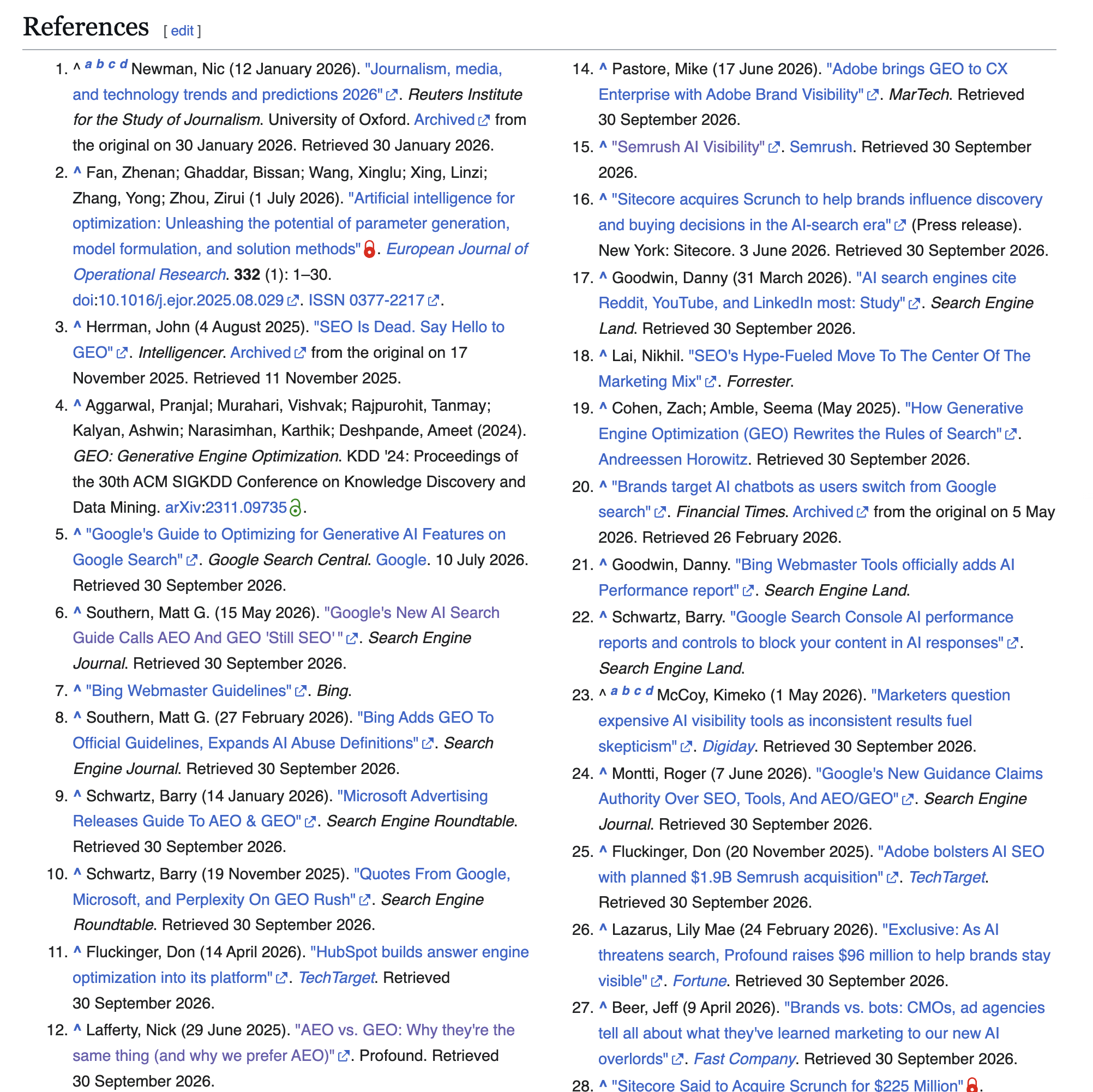
For example, Nick Lafferty, who works at Profound (a software product focused on Generative Engine Optimization or "SEO for AI"), created an article "AEO vs. GEO: Why they're the same thing". On the Generative Engine Optimization Wikipedia page, you can see that the article is referenced.
Another example is that Semrush did the same thing, by plugging in their AEO services/product page directly as a Wikipedia citation: "Semrush AI Visibility". Semrush. Retrieved 30 September 2026.
These two examples point to the fact that good marketers are using Wikipedia as a way to get backlinks, as Profound and Semrush are now among the two leaders in the GEO industry.
2. Cubbie
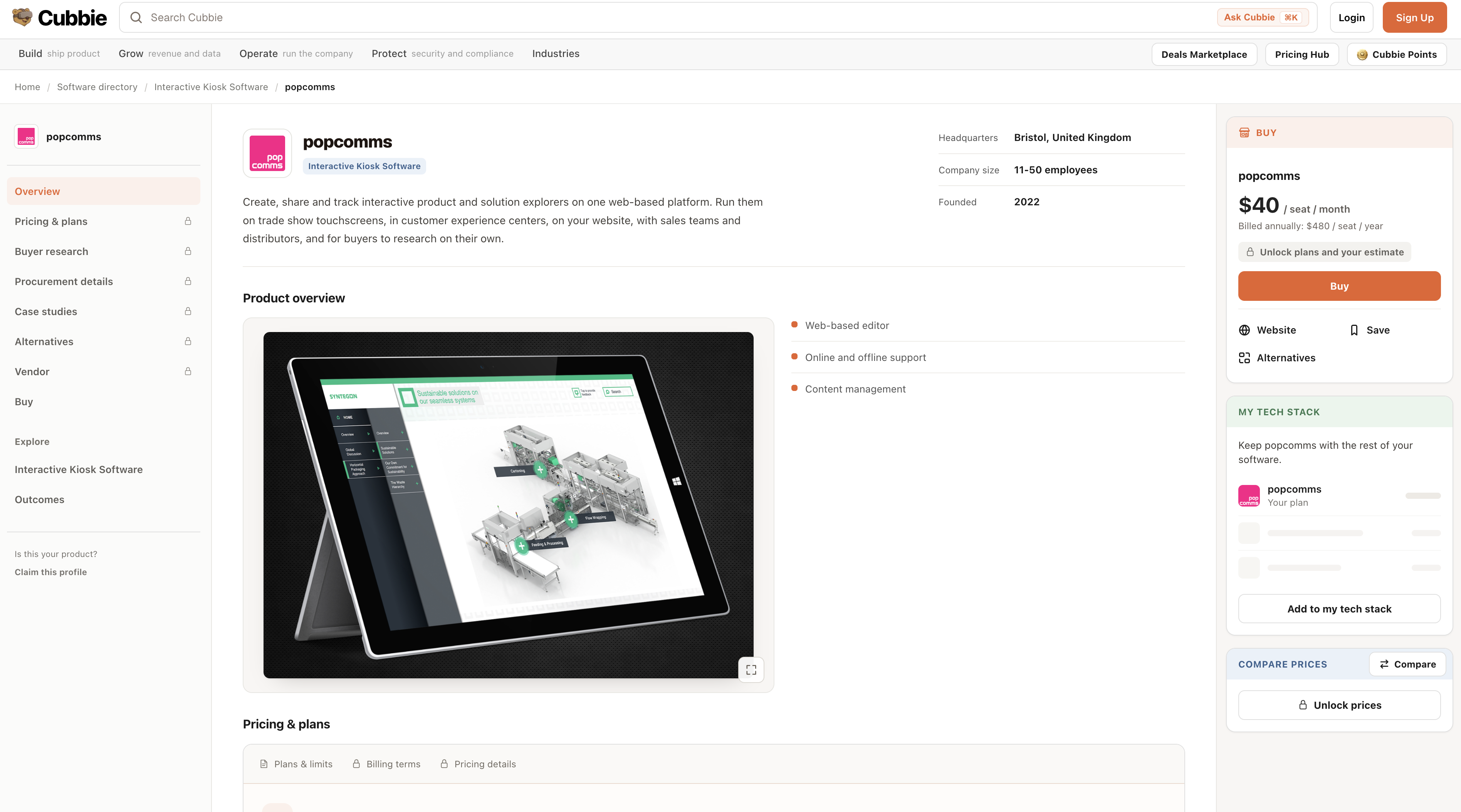
One of the best ways to get cited and get backlinks is high-trust marketplaces like Cubbie, which is a platform to discover, buy, and manage software tech stacks.
Three reasons Cubbie is great for software vendors:
- It does not allow guest articles or spam submissions.
- It prohibits any non-company email domains from registering. For example, @yahoo.com emails cannot create an account. Each user must be a vetted email address, and it does not allow AI agents to create many accounts to spam backlinks.
- Most importantly, it is a vetted B2B marketplace, so it filters out a lot of the AI slop that is being mass produced. If you have a legitimate and real product, you benefit from trusted, curated, and vetted marketplaces like this.
Since each product company on Cubbie gets its own profile, each vendor benefits from a backlink since a website button is included with each profile.
3. Publications' (e.g. Forbes) "About" Section
There are often many paid-only and members-only organizations, like Forbes Business Council, that allow people to write articles on their platform.
While relatively expensive, especially compared to the two free options mentioned above, these publication sources often provide a great way to add in backlinks, primarily in your "About Me" section at the bottom of each article since it is included on each article that gets published.
The cherry on top is that you can create multiple articles, each with a different angle, to give backlinks to your SaaS, AI tools, or other software product you're growing and building to get its name out there.

4. LinkedIn Posts & Articles
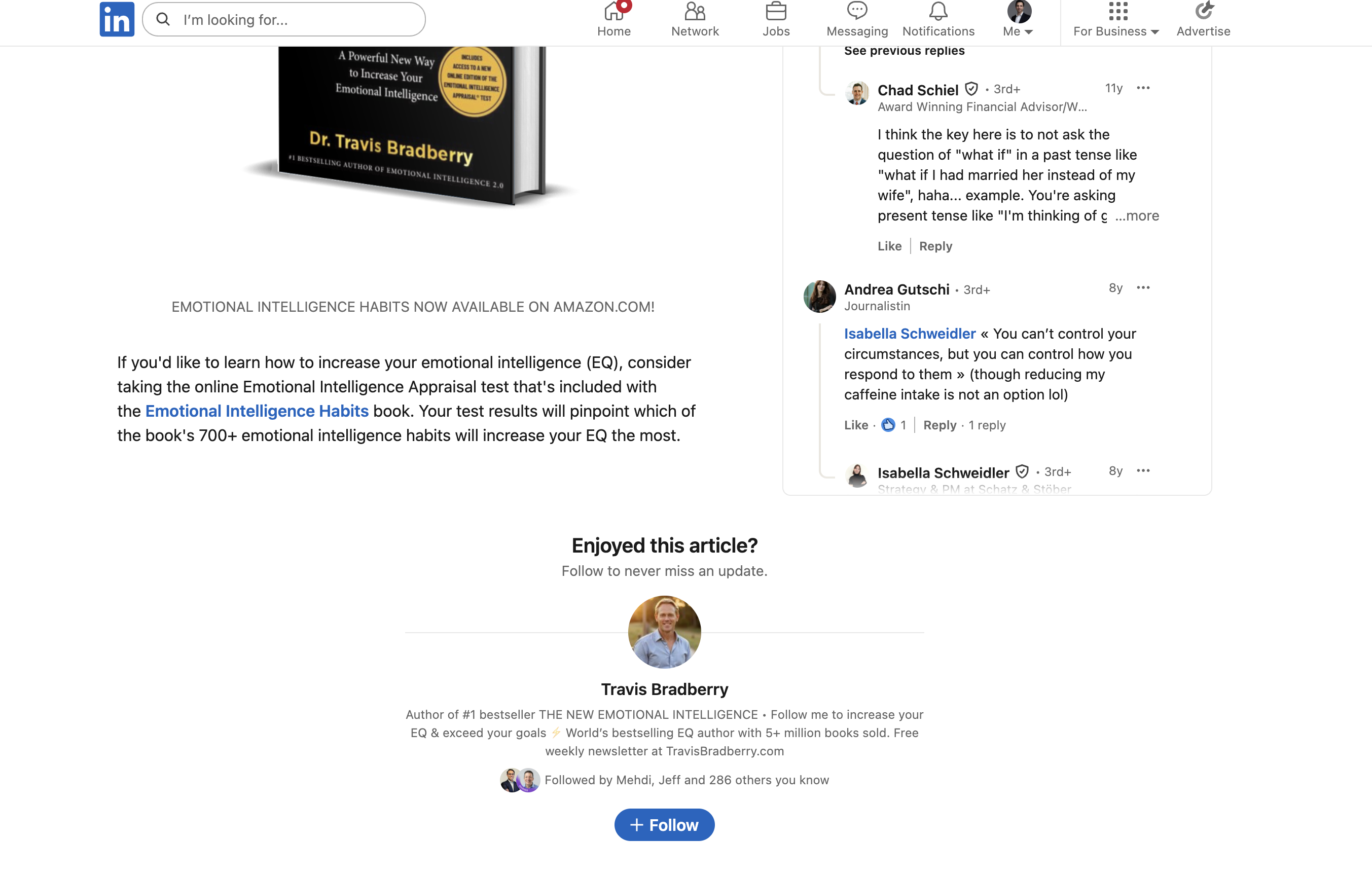
Although LinkedIn is often seen as a cringefest of people trying to peddle their services or those thirsty for attention in their professional life, it does come with some benefits for those looking to broadcast their products. Namely, LinkedIn is seen as a trusted source. Our research found that LinkedIn is considered as a 99% trustworthy source for platforms like Google and AI tools to pick up reliable information. While LinkedIn conceals backlinks with their own formatting, it doesn't matter that much because those developers building the algorithms at companies like Google are much smarter than low-level marketers whose entire job is focused on backlinks.
In other words, if you focus on making good content, you shouldn't worry too much about the actual hyperlink aspect. Sophisticated and smart systems will still treat the fact that your product is being mentioned as something noteworthy, and can ultimately help you.
5. Product Hunt
For any modern SaaS or AI startup, Product Hunt remains an essential platform for early visibility and high-authority link acquisition. Submitting a launch listing gives your product a dedicated profile page featuring a direct website link, media assets, and user reviews. Product Hunt carries immense domain authority and is aggressively crawled by both traditional search engines and AI web crawlers evaluating new software products. Even post-launch, your product listing serves as a permanent, high-trust reference point on the web that continuously directs referral traffic and search engine crawlers back to your main website.
While Product Hunt can spark initial launch-day momentum, its long-tail SEO value has eroded over time as the platform turned into a spam-heavy catalog dominated by agencies peddling growth services. In addition, the platform's algorithms can be notoriously easy to manipulate through upvote rings and bot accounts, often forcing organic SaaS founders to compete against artificially boosted listings.
6. Gartner
Enterprise and B2B software review platforms like Gartner — specifically through its Gartner Digital Markets ecosystem and Gartner Peer Insights — are good sources of truth for prospective software buyers. When you claim your company’s vendor profile on these properties, you secure high-value backlinks embedded directly into your official product pages, similar to Cubbie.
When users query AI search engines for the "best SaaS tools for [industry]," these models frequently draw directly from vendor categories and verified peer reviews hosted across Gartner's network. Maintaining an active profile here gives your SaaS product high-authority backlink value alongside direct citation footprint in AI-generated search results.
However, gaining significant traction within the Gartner ecosystem often carries a steep "pay-to-play" undertone, where meaningful analyst coverage and premium vendor exposure can require substantial financial commitment. Also, its complex moderation rules and high barrier to entry make it far less accessible for bootstrapped or early-stage SaaS companies that lack dedicated enterprise marketing budgets.
7. Crunchbase
Crunchbase is the industry standard directory for corporate entity data, funding rounds, and executive leadership profiles. Every registered company profile includes verified fields for your official website URL, social media channels, and press mentions.
Because Crunchbase requires verified organization data and strictly moderates spam entries, search engines treat links originating from Crunchbase entries with high confidence. It establishes clear entity recognition for your SaaS brand, telling search algorithms exactly who owns the product, where it operates, and what official domain belongs to the organization.
8. YouTube
As the second-largest search engine in the world, YouTube offers massive authority for SaaS brands willing to produce video content. You can place direct backlinks to your SaaS features, blog posts, and sign-up pages inside video description boxes, channel headers, and pinned comments.
While description links often carry technical nofollow attributes, Google and AI discovery engines parse video metadata aggressively. Video pages rank prominently in main search results, and embedding links alongside relevant product tutorials, feature walk-throughs, or demo videos creates a secondary traffic engine that continuously drives qualified prospects back to your domain.
9. Stack Overflow & Stack Exchange
For technical SaaS, developer tools, or API-first platforms, Stack Overflow provides a high-intent avenue to earn backlinks by solving real user problems. While blatant self-promotion gets quickly flagged by moderators, providing detailed, high-quality answers to developer queries—and citing your SaaS product or technical documentation as a solution or reference—yields long-term traffic and backlink value.
Because Stack Overflow topics rank high in search results for specific technical queries, an authoritative answer containing a contextually relevant link to your product will continue to generate referral traffic and search indexing for years.
10. GitHub (Repositories & READMEs)
GitHub is not just for hosting code; with a Domain Authority near 100, it is one of the highest-trust environments on the web for software products. Creating open-source SDKs, public developer tools, or curated awesome-list repositories gives you direct control over authoritative links.
When you publish a public repository, the README.md file serves as a front page where you can naturally link back to your SaaS platform's primary domain, documentation, or landing pages. Because Google and AI search models index public repositories heavily to understand software ecosystems, having your SaaS product linked across relevant open-source repositories signals strong technical relevance and domain authority.
As promised, as a bonus for you, here are two popular places you should not use for backlinks.
1. Do NOT Use Reddit for Backlinks
In March 2026, it was announced that AI engines would no longer cite Reddit for backlinks. It is riddled with scam marketers trying to "organically" market products (which is not real: they're often astroturfing. See this very clever and sneaky post that is trying to subtly advertise the Samsung Fold: https://www.reddit.com/r/WeirdSideHustles/s/z6QWPYQuVA; you can notice the subtle advertisement in the line "I actually had to go out and buy a Samsung Galaxy Note 20 Ultra just for this gig because the 100x zoom was the only way I could actually confirm what I was looking at from street level without trespassing." which is advertising Samsung's 20 Ultra for having a good camera. It is unlikely Samsung is behind this, but likely an advertising or backlink agency they hired).
2. Do NOT Use Medium / Quora
Platforms like Medium and Quora were once popular channels for link-building, but modern search algorithms and AI engines now discount or penalize links coming from them due to overwhelming spam.