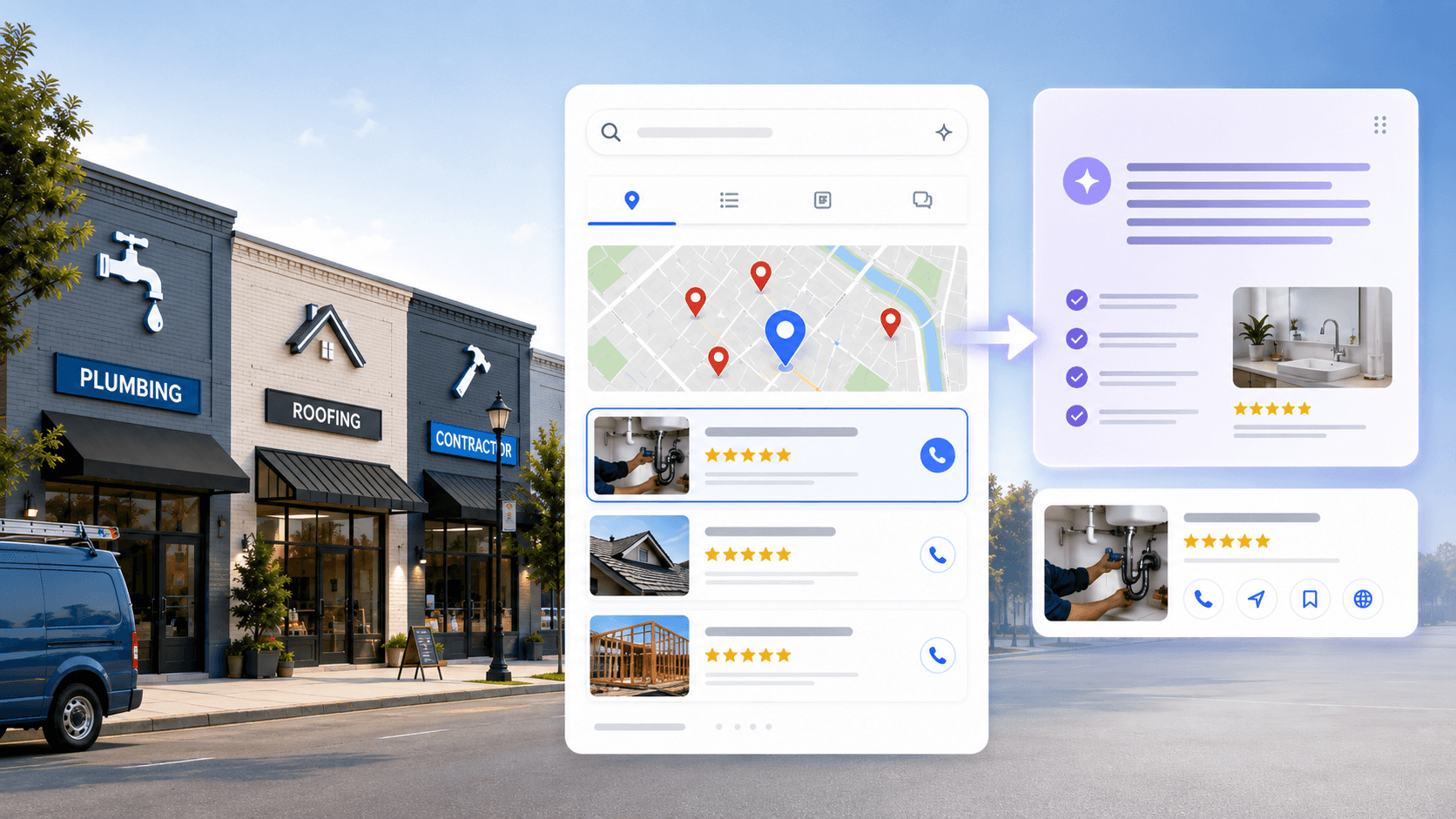
AEO vs GEO: Is There a Difference?
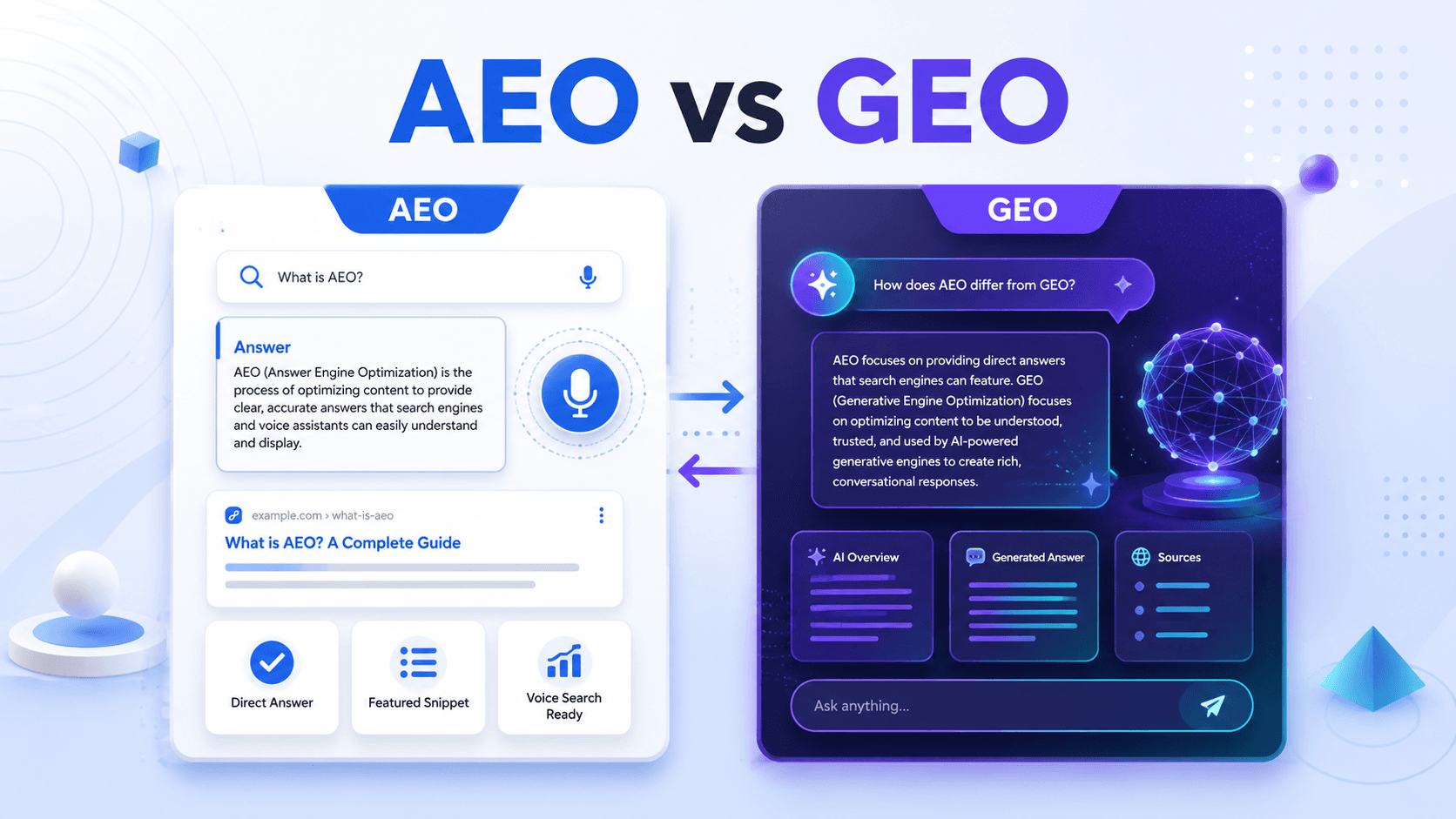
Yes, AEO and GEO are different, though the two are closely related. Answer Engine Optimization (AEO) is the practice of structuring content so it can be pulled out and shown as a direct answer, in places like featured snippets, AI Overviews, and voice results. Generative Engine Optimization (GEO) is the broader practice of making your entire brand, content library, and online presence easy for AI systems to understand, trust, and recommend.
In short: AEO wins a single answer. GEO builds the ongoing trust that gets your brand cited again and again. Most marketers now treat AEO as one important piece of a full GEO strategy, not a separate discipline competing with it.
What Is AEO (Answer Engine Optimization)?
AEO is the work of shaping a piece of content so a search engine or AI tool can lift it out and use it as a direct answer. Think of a featured snippet, a Google AI Overview, a "People Also Ask" result, or a spoken response from a voice assistant.
AEO tends to focus on:
- Clear, question based headings (often phrased the way a customer would actually ask)
- Direct, concise answers placed right after the heading
- FAQ sections formatted for FAQPage schema
- Short, factual paragraphs instead of long winding explanations
If someone asks their phone "how much does a root canal cost," AEO is what determines whether a dental practice's answer gets read aloud or displayed at the top of the results.
What Is GEO (Generative Engine Optimization)?
GEO takes a wider view. Instead of optimizing one page for one question, GEO is about making your business easy for generative AI systems, like ChatGPT, Perplexity, Gemini, and Google's AI Overviews, to understand, trust, and recommend across many different questions and conversations.
GEO looks at signals such as:
- Consistent business name, categories, services, and locations across your website and directories
- Original, expert level content that AI systems have reason to cite
- Reviews, credentials, and other trust signals that support recommendations
- How clearly your site defines who you are and what you actually do
Where AEO chases a specific placement, GEO builds the reputation that makes a brand a trustworthy source in the first place.
AEO vs GEO: The Core Difference
Here's a side by side look at how the two compare.
| AEO | GEO | |
|---|---|---|
| Primary goal | Win a specific answer placement | Build broad AI trust and citation |
| Scope | A single page, section, or FAQ | Your entire brand presence across the web |
| Typical output | Structured answers, schema, definitions | Consistent entity data, authoritative content, credibility signals |
| Best measured by | Snippet or AI Overview appearances | Frequency and accuracy of AI mentions and recommendations |
| Works well for | Specific, question based searches | Broad brand visibility across many AI tools |
Neither one works in isolation. A page that's well built for AEO still needs the entity consistency and trust signals that GEO provides in order to actually be selected as a source.
Is AEO a Subset of GEO?
In practice, yes. AEO is best understood as one tactic inside a larger GEO strategy, not a rival approach.
Generative engines decide what to cite based on a mix of factors: is the brand a recognized entity, is the content clear and well sourced, and is the specific passage structured well enough to extract cleanly. GEO covers the first two. AEO covers the third.
A business can have excellent AEO on one page and still struggle with GEO overall if its name, categories, and locations are inconsistent across the web, or if it has little original content for AI systems to reference. Strong GEO gives AEO something worth citing.
How AEO and GEO Both Depend on SEO
Here's the part that gets lost in a lot of the AEO and GEO conversation: neither one replaces SEO. Both depend on it.
Search engine optimization is still the infrastructure that makes a site findable in the first place:
- Technical health: fast load times, mobile friendly design, clean site architecture
- Crawlability: so search engines and AI crawlers can actually reach and read your content
- On page fundamentals: titles, headings, internal linking, and structured data
Without that foundation, AI systems cannot find or index your content, which means they have nothing to cite. AEO and GEO are best thought of as amplifiers layered on top of a solid SEO strategy, helping that same content reach further: into snippets, AI Overviews, and generative answers, not just the traditional blue links. Businesses that have already invested in SEO are not starting over. They're building on top of work that's already paying off.
Why Your Business Needs All Three
Search behavior is splitting into two paths. Some searches still send people to a results page where they compare options and click through. Others get answered directly, inside an AI summary or a voice response, without a single click.
- SEO earns you visibility and traffic on the searches where people still browse and compare.
- AEO earns you the direct answer on quick, specific questions.
- GEO earns you the ongoing trust that keeps your brand showing up as AI systems handle more of the research phase for your customers.
For small businesses in competitive local categories, like dental, legal, veterinary, healthcare, and financial services, skipping any one of the three leaves a real gap. If competitors show up in AI answers and a business doesn't, it becomes invisible at the exact moment a customer is deciding who to call.
Reputation also plays a bigger role than many business owners expect. AI systems weigh credibility signals like reviews and consistent online presence when deciding which businesses are trustworthy enough to recommend.
How to Get Started With AEO and GEO
A few practical steps to build both into an existing marketing strategy:
- Add FAQ sections with direct, concise answers to service pages and blog posts
- Use question based H2 and H3 headings that mirror how customers actually ask
- Keep your business name, address, phone number, and service categories consistent across your website, Google Business Profile, and directories
- Publish original, evidence rich content: case studies, pricing ranges, credentials, and specific service details, instead of generic, templated pages
- Add schema markup so search engines and AI systems can clearly identify FAQs, services, and reviews
- Keep site speed, mobile experience, and crawlability strong, since none of this works without a solid technical foundation
- Avoid the common shortcuts that quietly hurt AI visibility, like duplicated location pages or vague service descriptions; these are some of the most frequent GEO mistakes small businesses run into
Why Work With a Local Team on AEO and GEO Strategy
Precision Marketing Partners is based in Fuquay-Varina, NC, and has spent years helping small businesses across the Raleigh and Triangle area build marketing strategies that hold up as search keeps changing. Founded by Greg Fawcett and Jen Setzer, our team combines hands on SEO experience with an early, practical approach to GEO and AEO, built specifically for small businesses in healthcare, dental, veterinary, legal, financial, B2B, and nonprofit industries.
We don't treat AEO and GEO as trends bolted onto old strategies. We build them into the SEO work we're already doing for clients, so visibility grows across traditional search and AI search at the same time.
Ready to Show Up in AI Search?
AEO and GEO aren't competing strategies. They're two layers of the same opportunity: showing up when AI systems answer your customers' questions. At Precision Marketing Partners, we build GEO and AEO into every SEO strategy we create for small businesses across Raleigh, Fuquay-Varina, and the greater Triangle area.
Book a free strategy call to see where your business stands in AI search today.