What Google’s AI Search Changes Mean for Local Service Businesses
Google's AI Overviews and AI Mode now shape how customers in Raleigh, Fuquay Varina, and towns across the Triangle find dentists, attorneys, contractors, and other local service providers. Google's own May 2026 guidance confirms that ranking well in traditional search and earning citations in AI powered search results both depend on the same foundation: accurate business information, genuine expertise, and a strong reputation. For local service businesses, that means the work you have already been doing, if it is done well, is exactly the work that keeps you visible as search keeps changing.
This guide breaks down what actually changed in 2026, what it means specifically for local service businesses, and the practical steps to take next.
What Changed in Google's AI Search in 2026
Several developments over the past few months have reshaped how customers search for local services.
AI Mode grew sharply and the search box was redesigned around it.
At Google I/O in May 2026, Google made Gemini 3.5 Flash the default model powering AI Mode and introduced its biggest redesign of the search box in more than 25 years, one that accepts text, images, files, and video, and expands dynamically as a person types out a more conversational question. AI Mode surpassed one billion monthly users within its first year, with query volume more than doubling every quarter. It is worth being precise here: Google's own search leadership stated at the event that the new search box does not mean people only get AI responses, and traditional results still appear on the page. What changed is that the interface now leads more people into an AI generated answer first, not that classic search results were replaced.
Google published its first official AI search optimization guide.
On May 15, 2026, Google Search Central released a guide titled "Optimizing your website for generative AI features on Google Search." It is Google's most direct, on record statement about what helps a business appear in AI Overviews and AI Mode, and it settles a debate that has circulated in marketing circles for two years: Google states plainly that optimizing for generative AI search is optimizing for the search experience overall, and is therefore still SEO. There is no separate algorithm, no secret file format, and no shortcut.
A broad core update rolled out in parallel.
Google's May 2026 core update ran from May 21 through June 2. Early analysis suggests it produced meaningful ranking movement, particularly for thin or templated local pages that swap in a city name without offering anything genuinely useful to that community.
FAQ rich results were retired from search results pages.
As of May 7, 2026, Google stopped displaying the expandable FAQ snippet that used to appear directly in search results. This is a visual change, not a content change. FAQ content, and the schema markup behind it, still helps Google's systems understand what questions a page answers, which remains useful for AI Overviews and AI Mode even without the old visual snippet.
Preferred Sources expanded into AI Overviews.
Google's Preferred Sources feature, which lets people choose specific websites they want to see more often, now influences AI Overviews as well as traditional results. Google reports that people are roughly twice as likely to click through to a source they have marked as preferred.
AI Overviews vs. AI Mode: What Is the Difference
- AI Overviews are the AI generated summaries that appear inline, above the traditional blue links, for a specific search.
- AI Mode is a separate, fuller experience built for longer or more conversational questions, where a person can ask a follow up question and continue the conversation with context carried forward.
As of the May 2026 update, the two are increasingly connected. Someone can ask a follow up question directly from an AI Overview and flow straight into an AI Mode conversation without losing their original context.
For a local service business, the practical difference is this: a quick “plumber near me” search is more likely to trigger a traditional map pack and local listings. A more research oriented question, such as “how much does a water heater replacement cost” or “signs you need a new roof,” is far more likely to trigger an AI Overview or an AI Mode conversation.
Multiple 2026 studies estimate that AI Overviews still appear on a relatively small share, roughly 7 to 15 percent by most measures, of direct “near me” style searches, but appear far more often, sometimes in the majority of cases, on the informational and comparison questions that come before someone decides who to call. That distinction matters more than any single headline statistic, because it tells you where to focus your content.
What Google Itself Says About Optimizing for AI Search
Google's official guide is worth understanding because it clears up several misconceptions that have been circulating.
- SEO fundamentals still matter most. Google states that its generative AI features are built on its core search ranking and quality systems, so the practices that help a page rank well, technical health, page experience, clear structure, and useful content, are the same practices that help a page get cited by AI.
- "Non commodity" content is the strongest signal. Google's guide specifically calls out content that reflects a unique point of view, first hand experience, and genuine expertise as the type most likely to be cited. Generic, easily replicated content is not.
- No special files or markup are required. Google explicitly says businesses do not need an llms.txt file, do not need to chop content into small "AI friendly" chunks, and do not need special AI focused rewrites of existing pages. Google's systems can already understand a well organized page.
- Spam policies apply to AI features too. Google clarified that its existing spam policies, including those covering scaled content abuse and manipulative link building, apply fully to AI Overviews and AI Mode. Trying to game an AI citation carries the same risk as trying to game a traditional ranking.
- Local content depends on accurate, current business data. For local and service area content specifically, Google’s guide points directly to Google Business Profile accuracy, reviews, and location specific detail as key inputs.
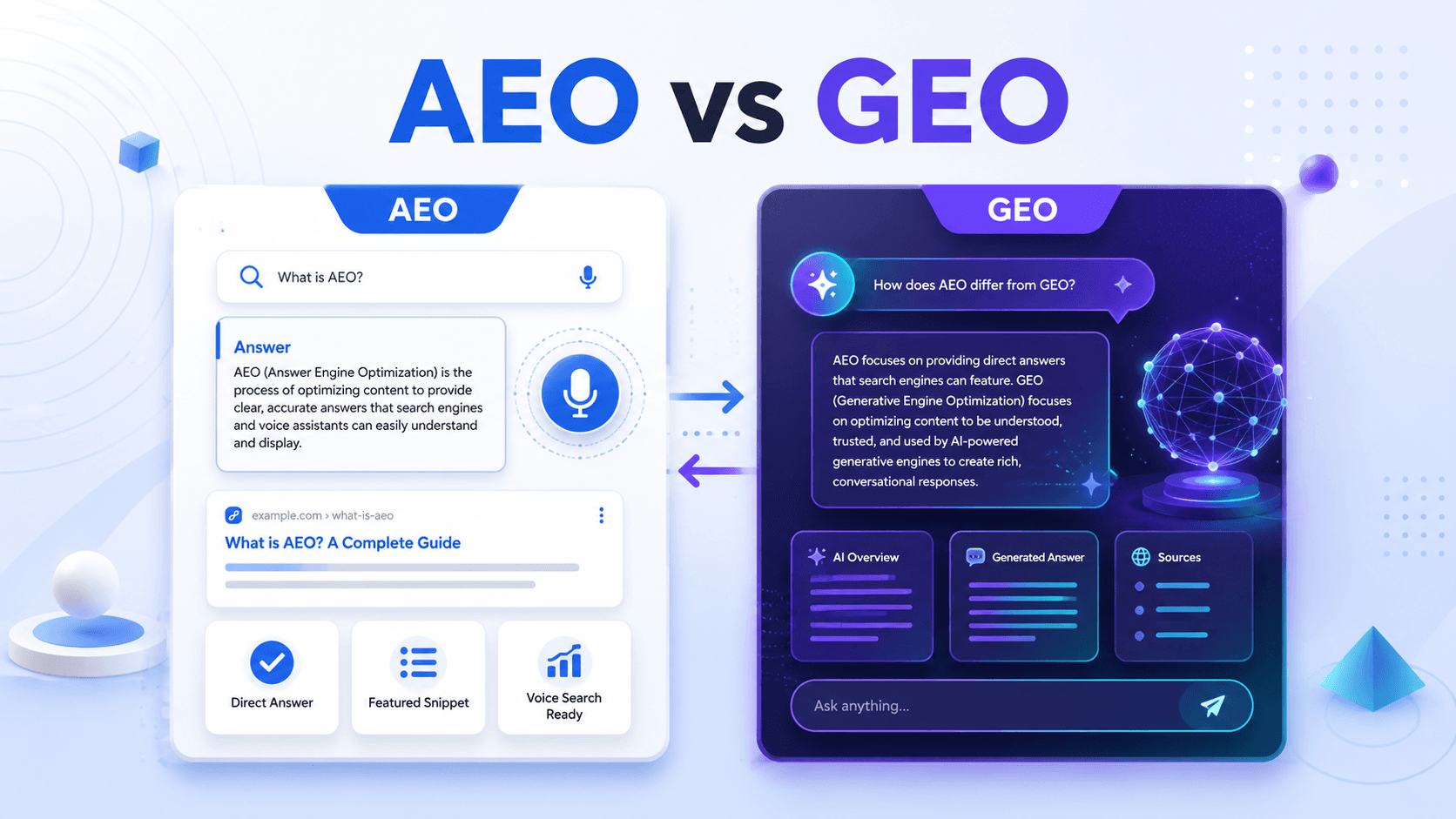
This guidance reinforces something worth remembering: generative engine optimization is not a replacement for traditional search engine optimization. It is an extension of the same fundamentals, aimed at a newer part of the results page.
What This Means for Local Service Businesses Specifically
A few practical implications follow directly from these changes.
Your Google Business Profile carries more weight than ever.
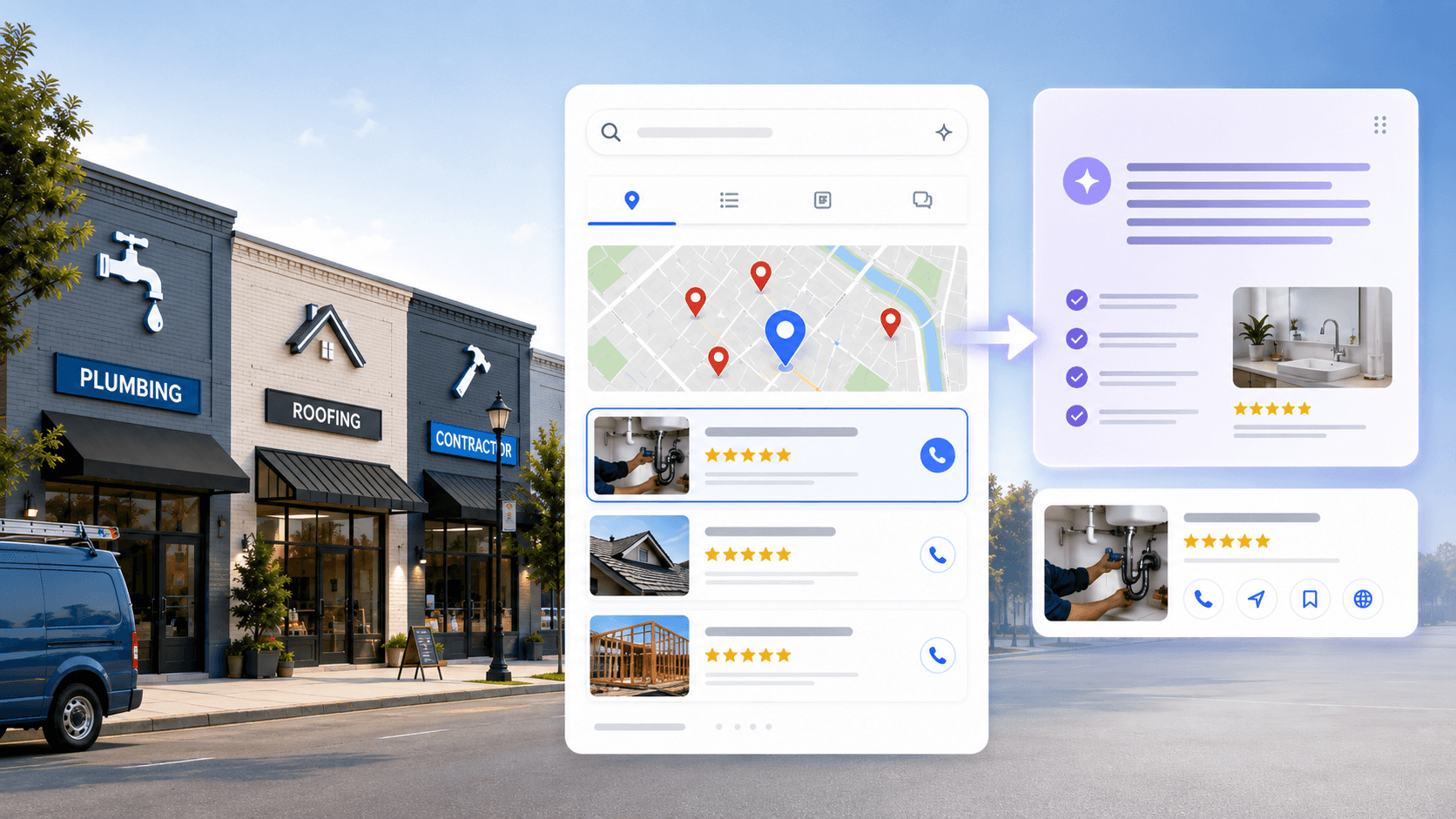
When an AI Overview does appear for a local intent query, it typically draws on Google Business Profile data, reviews, and local content. A complete, current, and actively managed profile is one of the highest leverage things a local service business can control.
Reviews are doing double duty.
AI generated review summaries now pull directly from the substance of what customers write, not just star ratings. Responding to every review, thanking customers by name where appropriate, and addressing concerns professionally sends a stronger signal than a high rating with no engagement behind it.
Educational content is now competing with Google's own AI answer.
The blog posts, service explainers, and FAQ pages that build trust and awareness are the same content types most likely to trigger an AI Overview instead of a click. The businesses that keep earning visibility here are the ones publishing content specific enough, with local pricing context, real project detail, and answers grounded in actual experience, that a generic AI summary cannot fully replace it.
Being named is becoming as important as being ranked.
A strong position on page one still matters, but a citation inside an AI Overview or AI Mode conversation can now be the difference between a customer calling you or calling a competitor they never had to scroll to find.
Zero click behavior is increasing.
More searches than ever end without a single click, as people get their answer, your hours, your rating, your service area, directly on the results page. This is not automatically bad news. It means your Google Business Profile, not just your website, is now doing real selling on your behalf, so it needs to be treated with the same care as your homepage.
Action Steps: How to Stay Visible in AI Search
Strengthen your Google Business Profile
Fill in every available field: services, hours, service area cities, attributes, and a business description that naturally answers common customer questions. Add new photos regularly and keep categories aligned with how customers actually search. This is foundational to any local SEO strategy and one of the fastest ways to influence what an AI Overview says about you.
Respond to every review
Thank positive reviewers and address negative ones with professionalism and a clear next step. This is core to reputation management and increasingly a direct input into AI generated summaries of your business.
Publish content only your business could write
Cost guides grounded in your actual local pricing, before and after project examples, and answers to the specific questions your customers ask in person all count as the kind of expert, first hand content Google says its AI systems favor. Generic, templated service pages are the content most likely to be replaced by an AI summary rather than cited as its source.
Keep your business information consistent everywhere
Your business name, address, and phone number should match exactly across your website, Google, Yelp, Facebook, and any industry directories. AI systems cross reference this information before recommending a business, so inconsistencies quietly undermine your visibility.
Build genuinely useful, non duplicate service area pages
If you serve multiple cities or neighborhoods, each page needs its own local detail rather than a swapped city name over identical copy. See our guide on building service area pages without duplicate content for a practical framework.
Keep using FAQ schema, even without the old visual snippet
The rich result display is gone, but FAQ formatted content still gives Google's systems a clean signal about what your page answers. Keep FAQ sections concise, direct, and genuinely useful to a reader.
Treat SEO and GEO as one strategy, not two
Google's own guidance confirms this. A site with strong search engine optimization fundamentals is already most of the way toward strong generative engine optimization. Traditional rankings and AI citations are not competing priorities.
Don't chase shortcuts
Skip the llms.txt files, the AI specific rewrites, and any agency promising guaranteed AI placement. Google has said directly that none of these are required, and that its spam policies apply fully to AI generated results.
Industries Feeling the Biggest Impact
Local service industries with high consideration purchases, meaning customers research before they commit, tend to see the most AI Overview activity on their informational content.
- Dental practices: cost, insurance, and procedure questions increasingly surface in AI Overviews before a patient calls. See our guide to local SEO for dental practices.
- Law firms: "do I need a lawyer for" and process questions are common AI Overview triggers. Our law firm marketing resources cover how to build the kind of content that earns trust here.
- Healthcare practices: symptom and treatment questions are among the most frequent AI Overview categories. Learn more about our approach to healthcare marketing.
- Veterinary practices: cost and symptom questions from worried pet owners follow the same pattern. See our veterinary marketing guidance.
- Financial services: comparison and "how does X work" questions are heavily represented in AI generated answers, making clear, compliant, expert content essential.
- Home services: cost guides and "signs you need" content are consistently cited categories, while direct "near me" searches for emergency services still lean on the traditional map pack.
Mistakes to Avoid
- Don't make unnecessary changes to your Google Business Profile. Edits to hours, categories, or your business description can occasionally trigger a review process that temporarily affects visibility. Only change what needs correcting.
- Don't chase fake reviews or manipulative citations. AI systems cross reference information across many sources, and manipulated signals are increasingly easy to detect.
- Don't abandon traditional SEO to chase AI trends. Google's own guidance confirms there is no separate playbook. Neglecting technical health, page speed, or content quality will hurt both your rankings and your AI visibility.
- Don't create a separate thin page for every possible question variation. Google explicitly discourages this approach and treats it as a form of scaled content abuse. One comprehensive, well organized page outperforms a dozen near duplicates.
- Don't assume a low local AI Overview trigger rate means you can ignore this shift. The trend is expanding, and the informational content that supports your local reputation is already affected today.