Impact of Technology on Modern Education AI
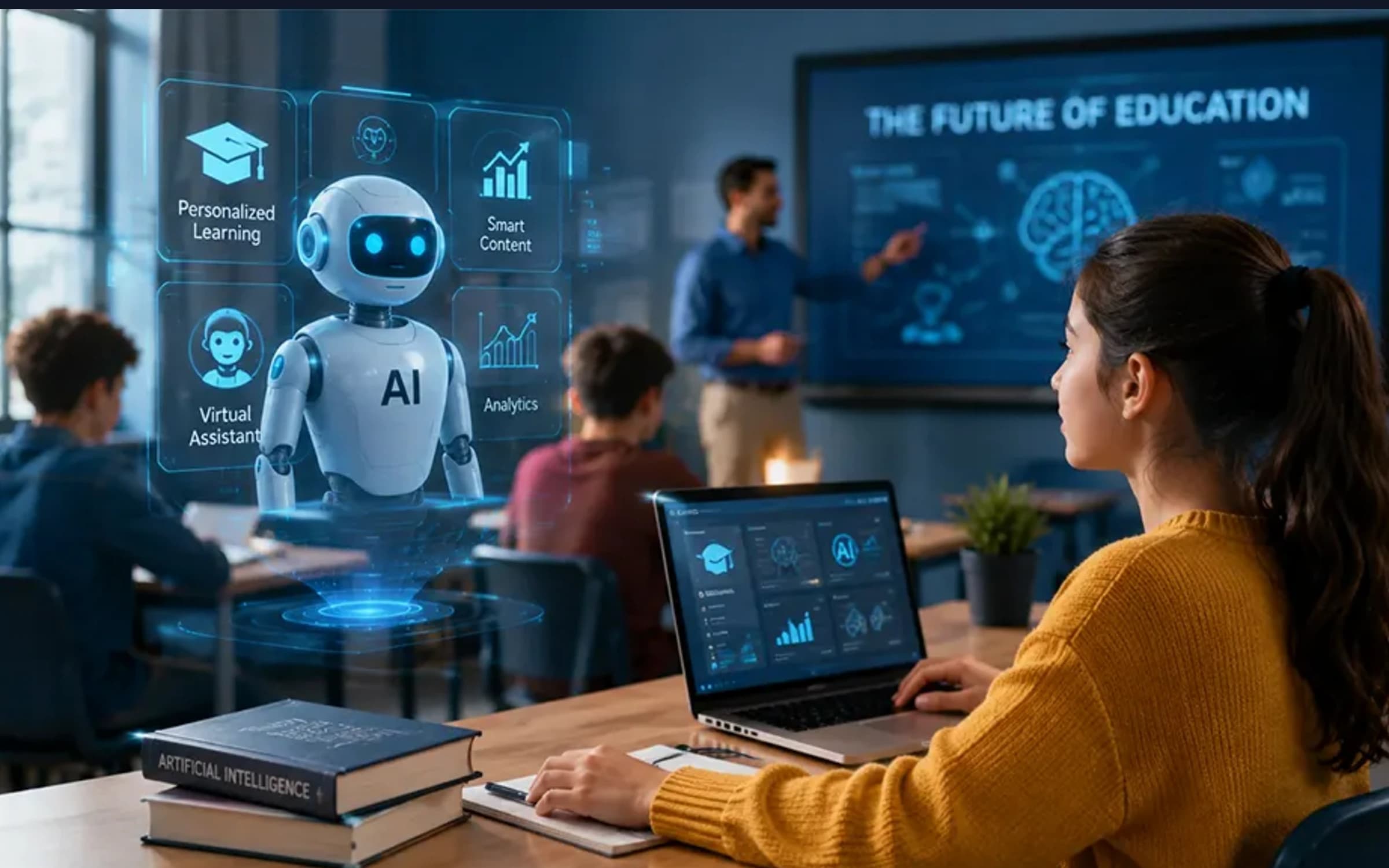
Technological advancements (yes, I am referring to AI) have always been a part of the system. New things get introduced, and then the whole world uses them in their field of work. The same goes with Artificial Intelligence (AI). Initially, the education system opposed it aggressively to combat cheating and ensure academic integrity. I recall those days when I was teaching in a university and the faculty had a list of reasoning and the conclusion saying: “USE OF AI IS STRICTLY PROHIBITED UNDER ALL CIRCUMSTANCES.” However, it has largely shifted from an outright ban on AI to embracing it under strict guidelines. AI is reshaping how teachers instruct, school operate, and how students absorb information, According to the data compiled by Azumo, the usage of AI among students has dramatically reached to 92% recently, which shows the steepest single-year increase on record among undergraduates. Educational institutions have achieved an 86% adoption rate of generative AI, which makes the education system the highest adoption sector in the world. So let us understand this in detail, how technology and AI are making massive changes in education. We will also discuss whether AI is actually beneficial for students or keeping them behind (the most controversial part). ### How AI Is Revolutionising Modern Learning The traditional education system works on a “one-size-fits-all” approach. But now the system is moving to dynamic, student-centred ecosystems that rely on several breakthroughs in technology. **Personalised Learning Pathways** Every student has different capabilities and absorbs information differently. A traditional lecture in a class - blackboard, a room full of students of different skillsets and learning pace, and the same lecture quality for everyone - works at a fixed pace. The AI-driven adaptive learning platforms analyse a student’s response pattern in real-time. If a student struggles with a problem, the system automatically adjusts and provides a simpler explanation of the breakdown of the concepts. Conversely, sharp learners get advanced problems, which saves their time and the level of problems as per their capacity contributes to better student engagement. Industry reports from Engegali show that AI-powered personalised learning increases student engagement rates by 60% and learning efficiency by 57%. This ensures that no student is left behind because of the speed of the lecture. **24/7 Virtual Tutoring and Continuous Feedback** While I was enrolled in a master’s degree in nursing, I still remember the struggle of waiting for the next day to clarify a concept or seek feedback from my professor on my essay. That time is long gone. AI chatbots and smart assistants bridge the gap when teachers are unavailable. These virtual [nursing assignment helpers](https://assignmentmaster.org.uk/nursing-assignment-help) and tutors can explain an intricate mathematical theorem or scientific theory in multiple ways until a student completely grasps it. Furthermore, automated assessment engines evaluate essays and assignments instantly. They then deliver granular feedback so students do not have to wait weeks to find out where they went wrong and then fix that section. **Lightening the Administrative Load for Educators** Teachers spend countless hours on grading objective quizzes, tracking attendance, and writing basic progress reports. AI can now perform these tedious and time-consuming tasks in the blink of an eye, which saves educators a lot of time. This saved time they can utilise on the tasks that actually matter, such as motivating students, providing 1-on-1 academic advice to them, or performing academic planning (some of the tasks that a human can perform better than AI). A research report by Gallup shows that teachers who use AI at least weekly estimate they save 5.9 hours per week on average. This is equivalent to roughly 6 extra weeks of institutional time per school annually. **Balancing AI with Specialised Human Support** AI tools lack critical thinking, ethical judgment, and practical experience in the field. There are certain tasks those which handed to AI solely might get messed up. These tools can hit a wall when dealing with highly nuanced and technical disciplines. Consider the medical and healthcare sectors. AI can provide basic medical information or definitions of a patient-centred model. However, it cannot offer the deep, practical insight required to cater for a real-world scenario. Therefore, many professionals or students do not solely rely on these tools for their tasks. Instead, they prefer to seek human [nursing assignment help](https://assignmentmaster.org.uk/nursing-assignment-help) who possess years of practical experience in the field and can effectively understand the situation and offer solutions accordingly. Merging smart technologies with real human support is the gold standard to master technical fields.
 Assignment Master UK