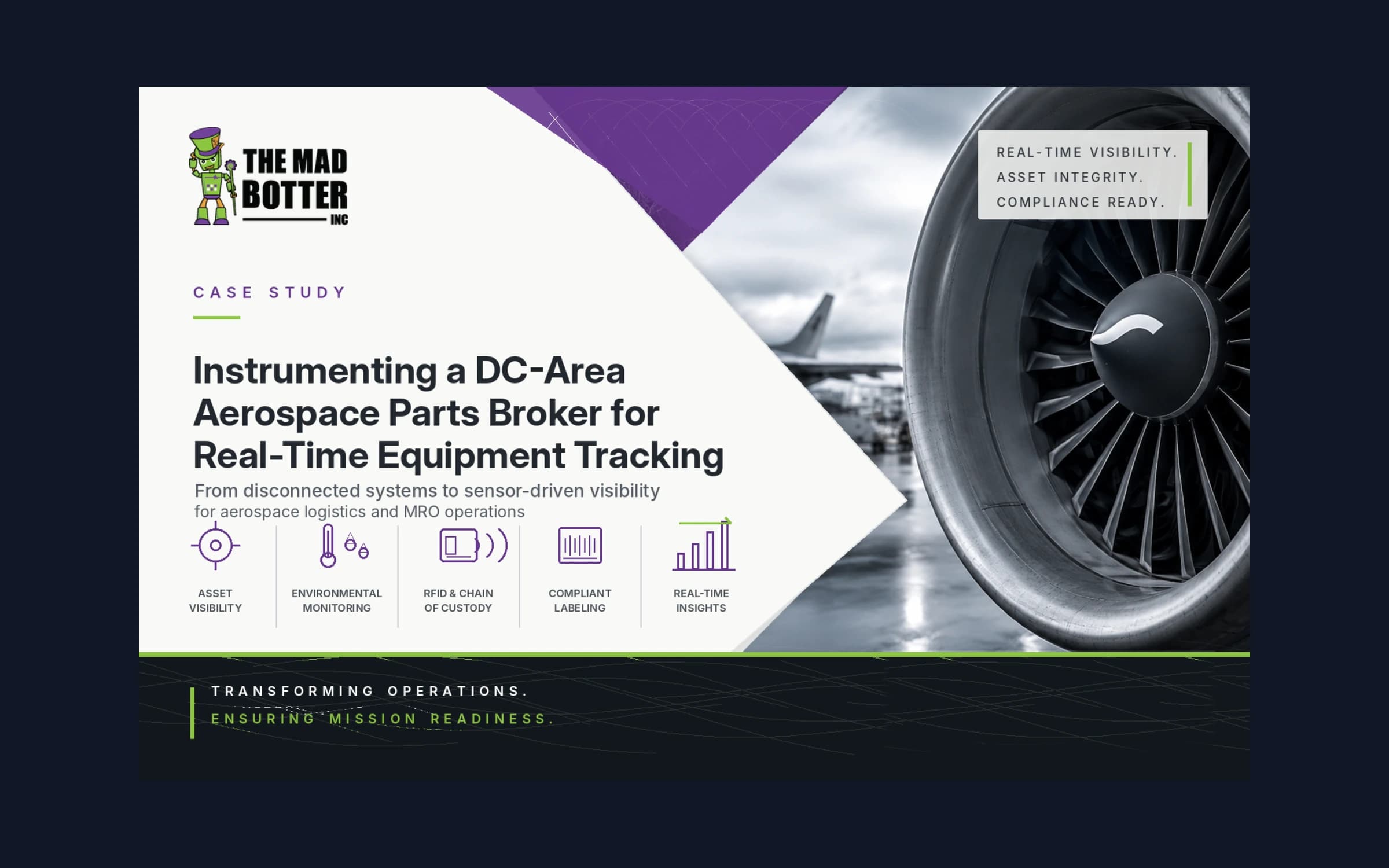
Our client is a Washington, DC–area aerospace parts broker and repair-management (MRO) shop that supplies and overhauls components for defense and government customers — among them the Defense Logistics Agency, NATO, allied air forces, and international buyers across four continents. It's demanding, compliance-heavy work: every outbound shipment has to satisfy MIL-STD-129 marking rules and ITAR/EAR export controls, and much of the inventory is high-value, corrosion-sensitive hardware. As the business grew, its operations outgrew the tools running them. Day-to-day work was spread across fifteen Monday.com boards holding roughly 14,000 line items, a tangle of Google Sheets, a 1.6-terabyte shared document store, QuickBooks, and a library of hand-built Word and PDF templates. An order's history physically migrated from one board to the next as it aged — RFQ, to orders, to warehouse, to finance, to archive — and the boards were stitched together only by free-text reference numbers typed by hand. There was no single system of record, and no reliable way to answer a simple question: where is this part right now, and what condition is it in?
Software Development
 The Mad BotterVerified
 Digital Fox Talent