📊 Amazon Seller Case Study (2026)
From Organic Traffic Strategy to $7.1M Revenue & 500K+ Orders
🚀 Overview
This case study showcases a scalable Amazon-based eCommerce system built on a hybrid organic growth model, combining:
Amazon SEO & ranking optimization
Brand website traffic funneling
Social media content marketing
Paid ads (only as a scaling accelerator, not the core driver)
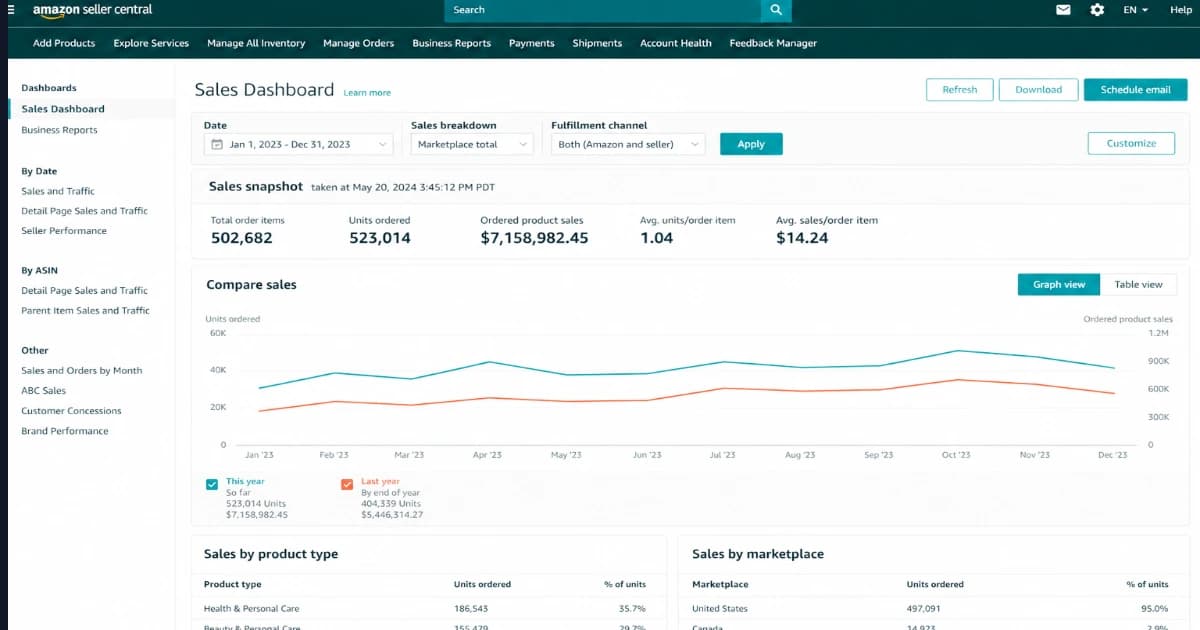
Over 12 months, the brand achieved:
Total Orders: 502,682
Units Sold: 523,014
Total Revenue: $7,158,982.45
Average Order Value: $14.24
Average Units per Order: 1.04
The core strength of this model was not reliance on ads—but building compounding organic traffic systems across multiple channels.
📈 Growth Strategy Breakdown
1. Organic Product Ranking Strategy (Amazon SEO)
The foundation of growth came from Amazon organic ranking domination, achieved through:
Keyword-optimized titles targeting high-intent search terms
Backend search term optimization
Structured bullet points focused on buyer intent
Conversion-focused product descriptions
Continuous keyword indexing improvements
👉 Result: Products consistently ranked on Page 1 for competitive keywords without relying heavily on PPC.
2. Brand Website Traffic Engine
A separate brand website acted as a traffic and authority hub, driving external signals into Amazon listings:
SEO blog content targeting product-related keywords
Comparison articles (“best”, “vs”, “review” content)
Email capture funnels for repeat buyers
Retargeting traffic back to Amazon listings
👉 Result: A steady stream of high-intent external traffic boosting Amazon ranking signals.
3. Social Media Growth System
The brand built consistent visibility using:
Short-form video content (TikTok, Instagram Reels, YouTube Shorts)
Viral deal-based content marketing
Product demonstration videos
Problem-solution style hooks
Social platforms were used not just for branding—but as a direct traffic conversion machine.
👉 Result:
Daily inbound traffic spikes
Higher branded search volume on Amazon
Improved organic ranking due to external traffic signals
4. Amazon PPC (Scaling Layer Only)
Instead of dependency, PPC was used strategically:
Only for validating winning products
Boosting already-converting listings
Keyword conquest campaigns on high-performing SKUs
👉 Result: Lower ACOS and higher organic dependency over time.
5. Conversion Optimization System
Every listing was engineered for maximum conversion:
High-impact lifestyle imagery
Emotional benefit-driven copywriting
Review optimization & social proof strategy
Strategic pricing ($9–$25 impulse-buy range)
Bundles to increase AOV
👉 Result: Consistent conversion stability across thousands of SKUs.
📊 Scaling Model
Once products gained traction:
Organic ranking strengthened first
PPC was layered for scaling only
Winners received aggressive inventory expansion
Underperformers were replaced quickly
Best products were pushed across multiple marketplaces
👉 This created a self-reinforcing growth loop:
Organic Ranking → More Sales → Better Ranking → Even More Organic Traffic
💡 Key Takeaways
This case study proves that scaling past $7M+ revenue is not just about ads—it is about building an ecosystem:
✔ Amazon SEO + Ranking
✔ Brand Website Authority
✔ Social Media Traffic Engine
✔ Conversion Optimization
✔ Smart PPC Scaling (not dependency)
🔥 Final Insight
The real growth driver was not a single product or viral moment.
It was a multi-channel organic traffic system where Amazon, website SEO, and social media all reinforced each other—creating compounding visibility, ranking dominance, and predictable daily sales growth.
Ecommerce Marketing
 TrySaleBooster
 BetlaceVerified